01What Starship is
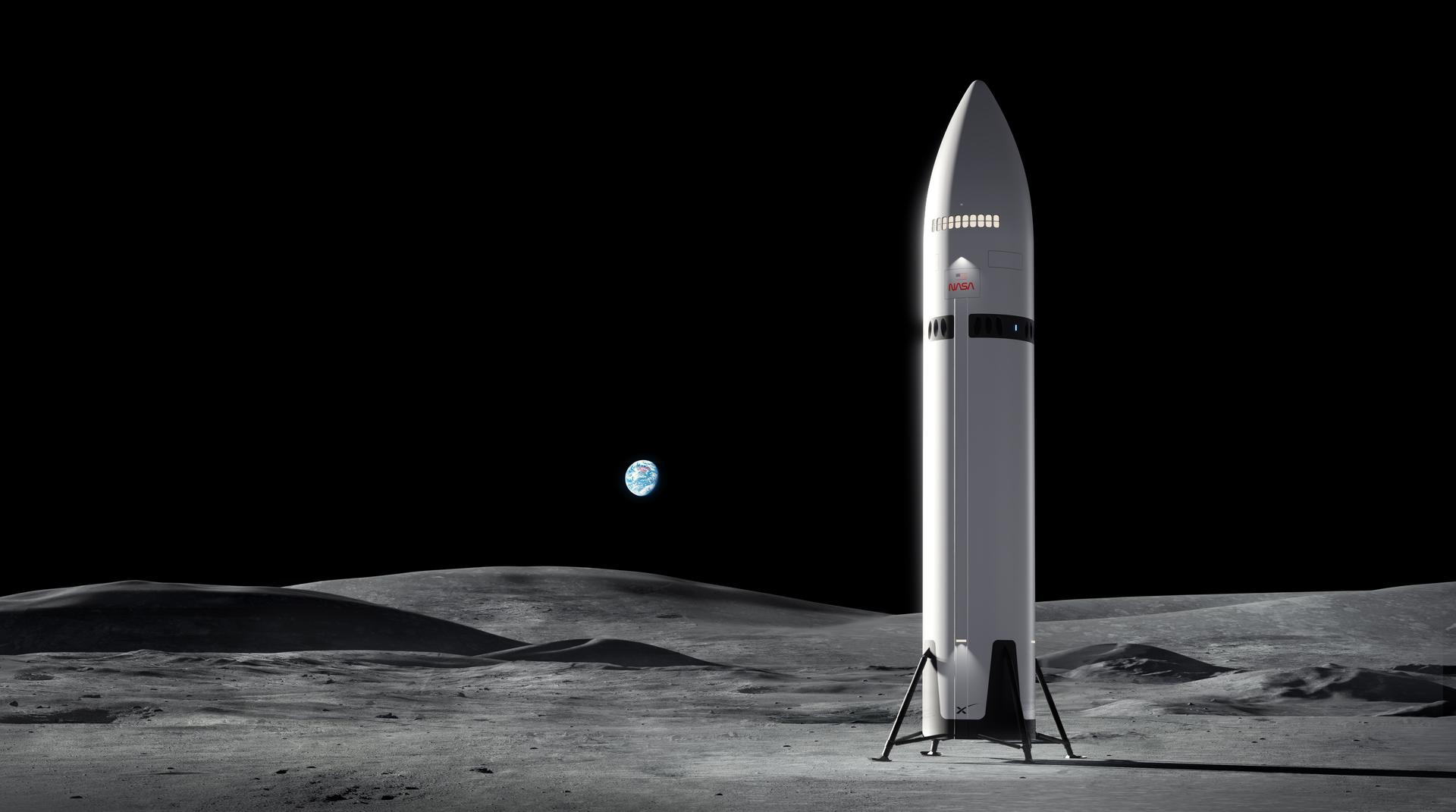
Starship is a two-stage, fully reusable launch system made of stainless steel: a giant first-stage booster called Super Heavy and an upper stage — the spacecraft itself — also called Starship. Together they stand about 121 metres tall and are designed so that both stages return and fly again.
SpaceX built it for one overriding purpose: to make life multiplanetary. The same vehicle is meant to launch satellites, land NASA astronauts on the Moon under Artemis, and eventually carry the first crews and cargo to build a base on Mars. Full reusability is the point — it is what could finally make spaceflight cheap enough to move a settlement’s worth of mass off Earth.
02How Starship came to be
The idea evolved through several names. In 2016 Elon Musk unveiled the Interplanetary Transport System (ITS); in 2017 it was reworked as the Big Falcon Rocket (BFR); and in 2018 SpaceX settled on today’s names — Starship for the ship and Super Heavy for the booster. Prototypes followed quickly, from the squat "Starhopper" to the tall high-altitude test articles.
03How Starship is built
Upper stage (Starship)
- A crew or cargo bay in the nose (payload volume larger than most space stations’ pressurized volume).
- A heat shield of ceramic tiles on the windward side for atmospheric re-entry.
- Four aerodynamic flaps that steer the belly-first descent.
- Its own Raptor engines (sea-level + vacuum) and control systems.
First stage (Super Heavy)
- A stainless-steel booster holding the bulk of the propellant.
- A cluster of 33 Raptor engines at its base.
- Grid fins and a return profile that lets the launch tower’s arms ("chopsticks") catch it.
04Technical specifications
Approximate figures for the full stack; they change between Block versions as SpaceX iterates.
| Parameter | Value (approx.) |
|---|---|
| Height (full stack) | ~121 m |
| Diameter | 9 m |
| Fuelled mass | ~5,000 t |
| Payload to LEO (reusable) | 100–150 t (target) |
| Engines | 33 (booster) + 6 (ship) Raptor |
| Liftoff thrust | ~74 MN (most powerful ever) |
| Hull material | Stainless steel |
| Crew capacity (design goal) | up to ~100 (long Mars trips) |
05Raptor engines
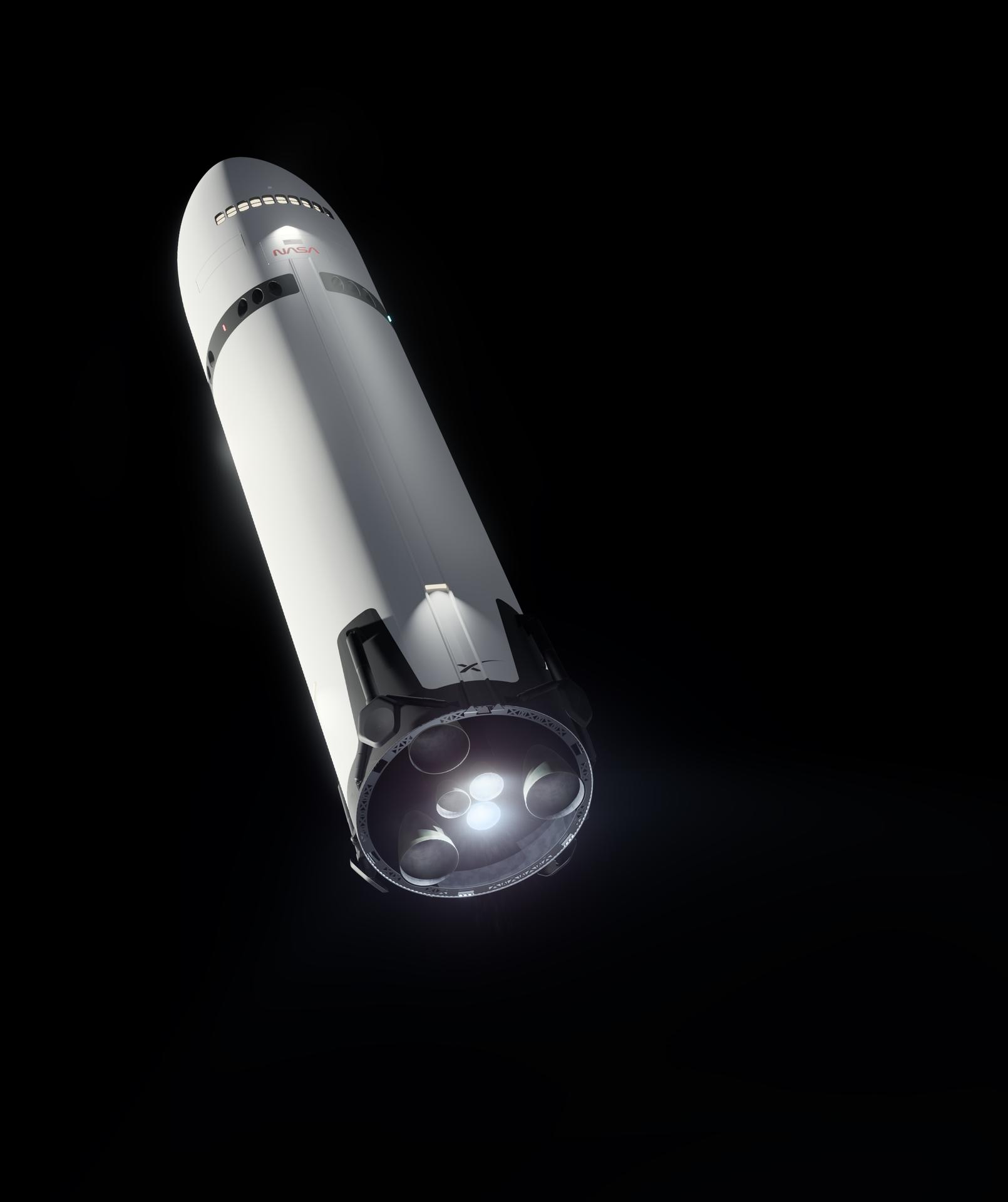
Raptor is the engine that makes Starship possible. It burns liquid methane and liquid oxygen (methalox) in a full-flow staged-combustion cycle — one of the hardest engine cycles to build, and among the most efficient. SpaceX has iterated through Raptor 1, 2 and 3, each simpler, cheaper and more powerful.
Raptor vs Merlin
Falcon 9’s Merlin burns kerosene (RP-1) with a simpler gas-generator cycle. Raptor switches to methane and a full-flow staged-combustion cycle at much higher chamber pressure — more efficient, and methane can be made on Mars, which kerosene cannot.
06Why methane fuel
- Efficiency — methalox offers high performance with a manageable engine design.
- It can be made on Mars. The Sabatier reaction turns Martian CO₂ and water into methane, so a return ship refuels locally (ISRU).
- Cleaner burning — methane leaves far less soot than kerosene, which helps reuse the engines quickly.
- Cost and handling advantages over hydrogen (which is bulky and hard to store).
07How a Starship launch works
- 1. Liftoff — all 33 Super Heavy engines fire.
- 2. Hot-stage separation — Starship’s engines light before the stages fully part.
- 3. Booster return — Super Heavy flies back to be caught by the launch tower.
- 4. Orbit — Starship continues to orbital velocity.
- 5. Refuelling — for deep-space trips, it tops up from tanker Starships in orbit.
- 6. Transit — the ship coasts to the Moon or Mars.
- 7. Landing — it re-enters, flips upright and lands propulsively.
08Orbital refuelling
Starship reaches orbit nearly empty of propellant, so any trip beyond needs refuelling in space. Tanker Starships launch, dock with the vehicle in Earth orbit and transfer methane and oxygen, filling its tanks for the journey to the Moon or Mars.
- Why it matters — it is the key that unlocks the Moon and Mars with a single vehicle.
- The hard part — transferring cryogenic propellant in microgravity has never been done at this scale.
- Several tanker flights may be needed to fill one Mars-bound ship.
09Full reusability
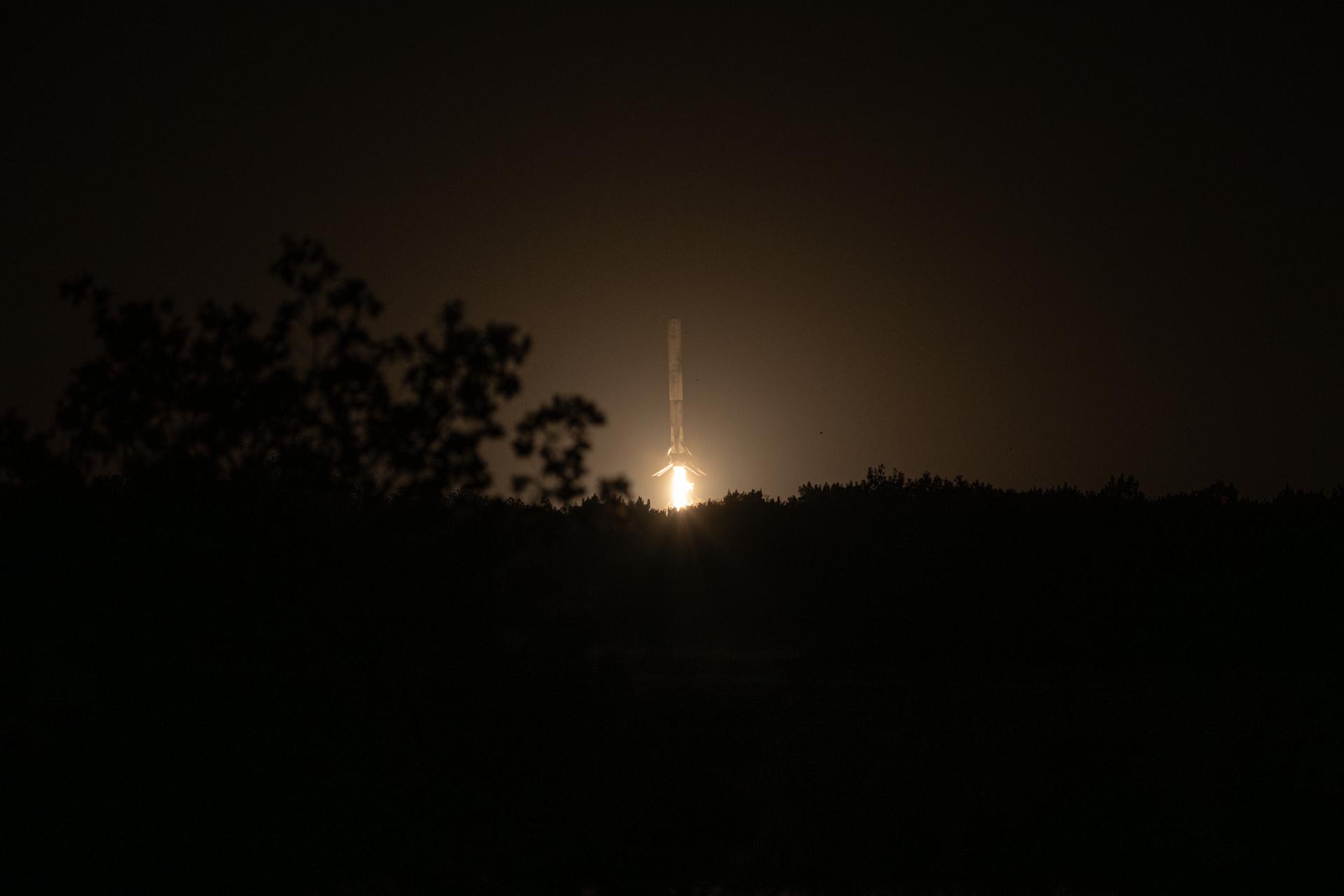
Unlike Saturn V or the SLS, Starship is designed so that nothing is thrown away. The Super Heavy booster returns to be caught by the tower’s arms, and the ship re-enters and lands to fly again. If it works routinely, the cost per flight could fall dramatically, because only fuel and refurbishment — not the rocket — are spent each time.
10Flight testing
SpaceX develops Starship by flying hardware early and often, learning from failures. The program has moved through clear phases.
| Phase | What was tested |
|---|---|
| Hops (2019) | Starhopper — short low-altitude engine tests. |
| High-altitude (2020–21) | SN8–SN15 flew ~10 km and tested the belly-flop landing; SN15 landed intact. |
| Orbital (2023→) | Integrated Super Heavy + Ship flights; hot staging; first tower catch of the booster. |
A note on dates
Test flights come fast and specifics change often. We update this page after each major milestone rather than freeze a snapshot.
11Starship and the trip to Mars
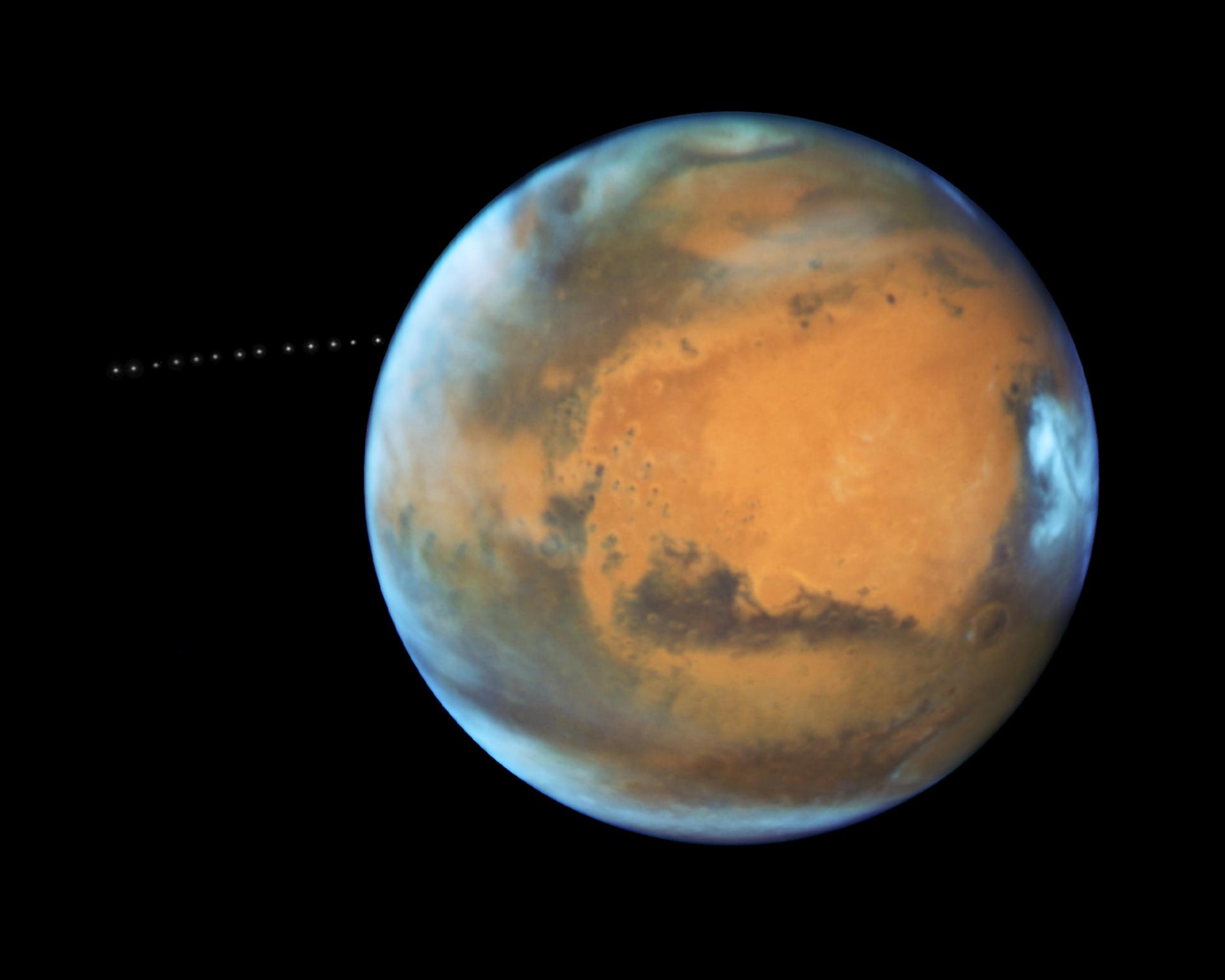
- Carrying crews — ferrying the first settlers on the ~6–9 month transit.
- Delivering cargo — landing the mass a base needs before people arrive.
- Building the base — bringing habitats, power systems and machinery.
- Moving equipment — rovers, drills and construction robots.
- Resupplying the colony on each launch window.
12Starship and the Artemis program
NASA selected a lunar version of Starship as the Human Landing System (HLS) to put Artemis astronauts on the Moon’s surface. The Moon variant drops the flaps and heat shield it doesn’t need there, and relies on the same orbital-refuelling approach. It works alongside NASA’s SLS rocket and Orion capsule, which carry the crew to lunar orbit.
13Cargo capabilities
- Large batches of satellites in one launch.
- Modules for space stations.
- Heavy cargo for Mars and Moon missions.
- Scientific and government payloads.
- Oversized structures that no other rocket can fit.
14The crewed version
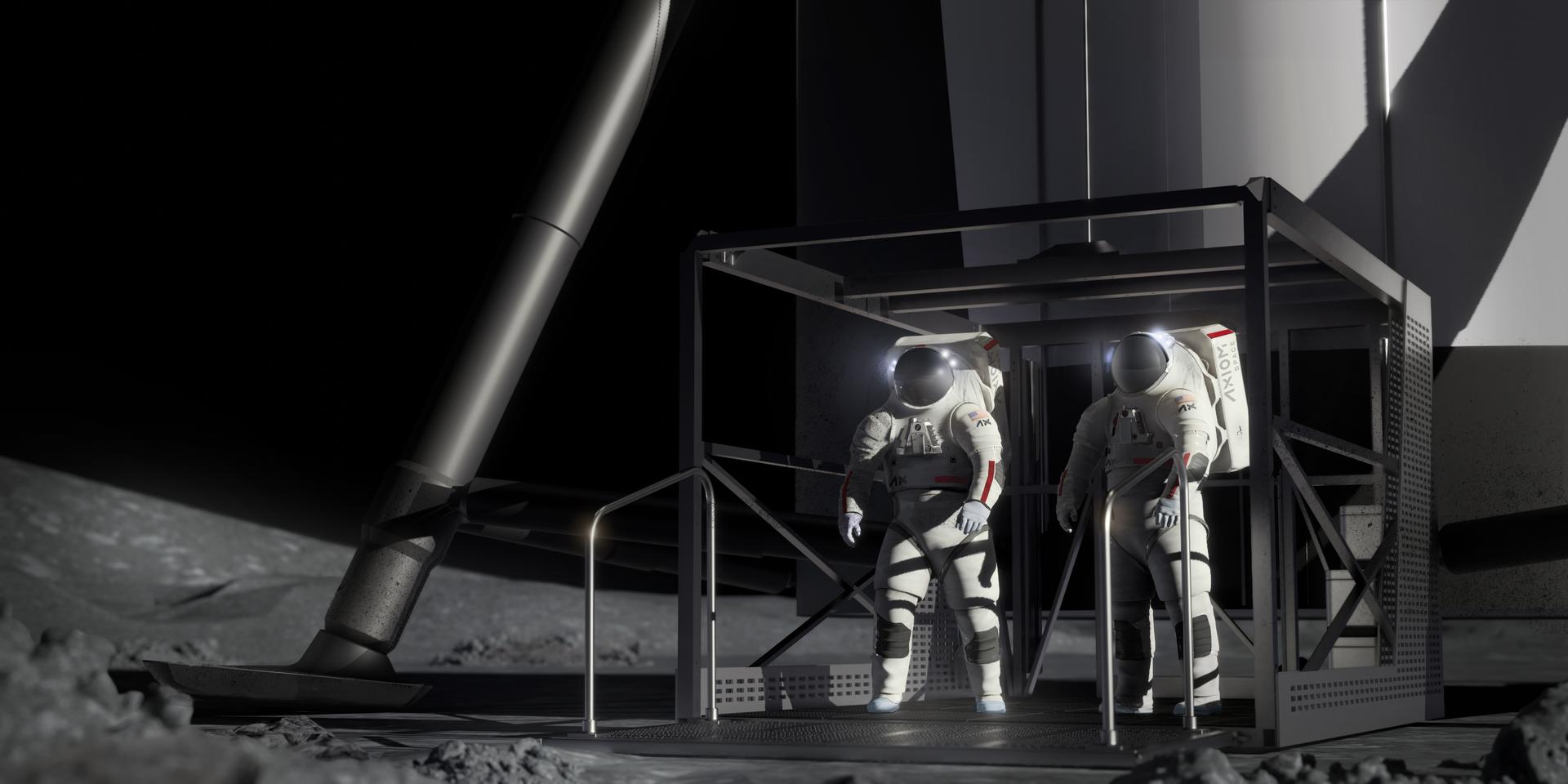
- A design goal of up to ~100 people on long-duration Mars flights.
- Living quarters, common areas and storage in the pressurized nose.
- Life support — air, water and food systems for months in transit.
- Radiation shelter and redundancy for crew safety.
15Landing on Mars
- Atmospheric entry — hitting the thin Martian air at high speed, protected by the heat shield.
- Aerobraking — using that atmosphere to shed most of the velocity.
- Propulsive touchdown — Raptor engines flip the ship upright and land it.
- Site selection — flat ground near buried ice for fuel and water.
- Risks — Mars’ thin air makes landing large mass one of the hardest parts of the mission.
16Making fuel on Mars
Starship’s methalox fuel is the reason it can come home. Rather than carry return propellant all the way from Earth, the plan is to make it on Mars.
- Mine water ice from beneath the surface.
- Electrolyse water into hydrogen and oxygen.
- Run the Sabatier reaction: CO₂ + hydrogen → methane + water.
- Store the cryogenic methane and oxygen for the return launch.
17Safety
- Engine-out capability — with 33 booster engines, some can fail and the flight continues.
- Heat shield protecting the ship through re-entry.
- Redundant systems for critical functions.
- A test-heavy development approach to find failures before crews fly.
- Crew-protection design still maturing — human flights follow extensive uncrewed testing.
18How it compares to other rockets
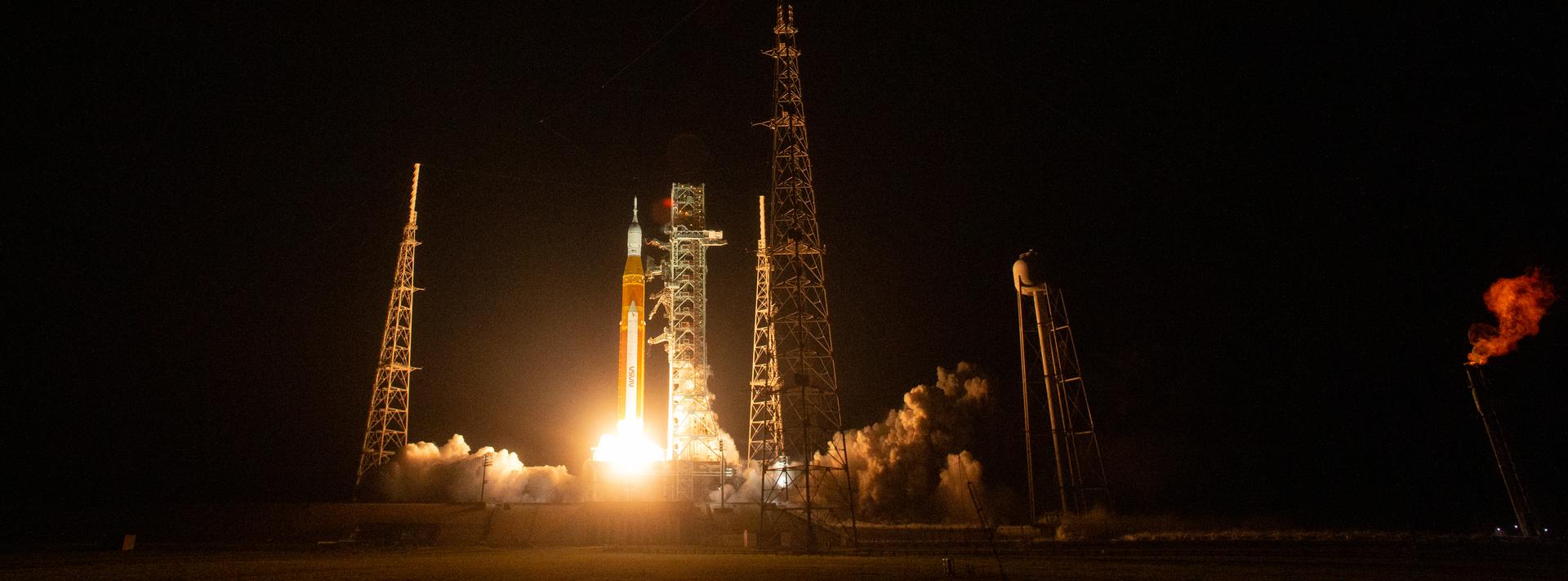
| Rocket | Height | Payload to LEO | Reusability |
|---|---|---|---|
| Starship | ~121 m | 100–150 t (target) | Fully reusable |
| Saturn V | ~111 m | ~140 t | Expendable |
| SLS (Block 1) | ~98 m | ~95 t | Expendable |
| Falcon Heavy | ~70 m | ~64 t | Partly reusable |
| New Glenn | ~98 m | ~45 t | Partly reusable |
At about 74 meganewtons of liftoff thrust, Super Heavy is the most powerful rocket stage ever flown — roughly twice the thrust of the Saturn V that sent Apollo to the Moon.
19The economics
SpaceX self-funds most of Starship’s development, with total spend widely estimated in the several-billion-dollar range. The economic case rests on reuse: if a vehicle flies many times with only fuel and refurbishment between flights, the cost per launch could eventually fall to a small fraction of today’s heavy rockets. SpaceX’s long-term cost targets are aspirational and unproven — treat specific per-launch numbers as goals.
20The future of Starship
- Routine, rapid-reuse flights from multiple launch sites.
- Landing crews on the Moon and helping build lunar bases.
- Carrying the first cargo and people to settle Mars.
- Space tourism and point-to-point ideas.
- Becoming the backbone of interplanetary logistics.
21Interesting facts
- Starship is the tallest and most powerful rocket ever built.
- It is made of stainless steel, not the aluminium or composites of most rockets.
- It burns methane instead of the kerosene used by Falcon 9.
- The Super Heavy booster is designed to be caught in mid-air by the launch tower.
- It is meant to be fully reusable — both stages fly again.
- Its liftoff thrust is roughly double that of the Saturn V.
- The ship re-enters belly-first, then flips upright to land.
- Its methane fuel was chosen partly because it can be manufactured on Mars.
- NASA picked Starship to land astronauts on the Moon under Artemis.
- One Starship’s payload volume is larger than the pressurized volume of the ISS.
22Program timeline
| Year | Milestone |
|---|---|
| 2016 | Musk unveils the Interplanetary Transport System (ITS). |
| 2017 | Concept reworked as the Big Falcon Rocket (BFR). |
| 2018 | Renamed Starship (ship) + Super Heavy (booster). |
| 2019 | Starhopper flies; first full-scale prototypes. |
| 2020–21 | High-altitude tests; SN15 lands intact. |
| 2023→ | Integrated orbital test flights; hot staging; booster catch. |
23Glossary
| Term | Definition |
|---|---|
| Starship | The reusable upper stage / spacecraft — and the name of the whole system. |
| Super Heavy | The first-stage booster with 33 Raptor engines. |
| Raptor | SpaceX’s methane/oxygen full-flow staged-combustion engine. |
| Hot staging | Lighting the upper stage’s engines before the stages fully separate. |
| Booster | The first stage that provides liftoff thrust — here, Super Heavy. |
| Ship | Shorthand for the Starship upper stage. |
| Heat shield | The ceramic tiles protecting the ship during re-entry. |
| Belly flop | The horizontal, belly-first descent before the landing flip. |
| Cryogenic fuel | Super-cooled liquid propellant — here liquid methane and oxygen. |
| ISRU | In-situ resource utilization — making fuel/water from local resources. |
| Orbital refuelling | Transferring propellant between ships in orbit for deep-space trips. |
Continue exploring
24Frequently asked questions
What is Starship?
SpaceX’s fully reusable super-heavy launch system — a Super Heavy booster plus the Starship upper stage — built to carry people and cargo to orbit, the Moon and Mars.
Who developed Starship?
SpaceX, the American company founded by Elon Musk, developed and builds Starship, mostly at its Starbase site in Texas.
How tall is Starship?
The full stack stands about 121 metres tall and is 9 metres in diameter, making it the tallest rocket ever built.
How many engines does Starship have?
The Super Heavy booster has 33 Raptor engines and the Starship upper stage has 6, for 39 in total.
What is Super Heavy?
Super Heavy is Starship’s first stage — the giant booster with 33 Raptor engines that provides liftoff thrust and then returns to be caught by the launch tower.
How is Raptor different from Merlin?
Merlin (Falcon 9) burns kerosene in a simpler cycle; Raptor burns methane and oxygen in a full-flow staged-combustion cycle at much higher pressure — more efficient, and methane can be made on Mars.
Why does it use methane?
Methane is efficient, burns cleanly (helping fast reuse), and — crucially — can be manufactured on Mars from CO₂ and water, so a ship can refuel for the trip home.
How many people can Starship carry?
The design goal is up to about 100 people on long Mars voyages; early crewed flights would carry far fewer.
When is the first crewed Mars flight?
No date is confirmed. SpaceX targets uncrewed landings this decade and crewed flights in the 2030s, but such dates have slipped before.
How much does a Starship launch cost?
Current costs are high while the system is in development. SpaceX’s long-term goal is a small fraction of today’s heavy-rocket prices thanks to full reuse — an aspiration, not a proven figure.
Is Starship fully reusable?
That is the design intent — both the booster and the ship are meant to return and fly again. Reliable full reuse is still being demonstrated in testing.
How does it land on Earth and Mars?
It re-enters belly-first, uses aerodynamic flaps to control the fall, then flips upright and fires its Raptor engines for a propulsive landing. Mars uses the same sequence with a thinner atmosphere.
What is orbital refuelling?
Tanker Starships transfer methane and oxygen to a ship already in orbit, filling its tanks so it can travel to the Moon or Mars. It is essential and technically difficult.
What role does Starship play in Artemis?
NASA chose a lunar Starship as the Human Landing System to carry Artemis astronauts from lunar orbit down to the Moon’s surface and back.
What is Starship made of?
Stainless steel, chosen for strength across a wide temperature range, heat tolerance during re-entry and low cost — unusual among modern rockets.
How powerful is Starship?
Its liftoff thrust is around 74 meganewtons — roughly double the Saturn V — making it the most powerful rocket ever flown.
How is Starship different from Falcon 9?
Falcon 9 is a partly reusable kerosene rocket for orbit; Starship is a far larger, fully reusable methane vehicle aimed at the Moon and Mars.
What is hot staging?
Igniting the upper stage’s engines before it fully separates from the booster, which improves performance. SpaceX introduced it during orbital flight testing.
How much can Starship lift?
The target is roughly 100–150 tonnes to low Earth orbit in reusable mode — more than any other current rocket.
Where does Starship launch from?
Primarily from SpaceX’s Starbase in Boca Chica, Texas, with launch infrastructure also being developed in Florida.
Has Starship reached orbit?
Integrated test flights have reached space and near-orbital trajectories; the program is progressing through orbital testing toward operational flights.
How is fuel made on Mars for the return trip?
By mining water ice, electrolysing it for hydrogen and oxygen, and running the Sabatier reaction to combine CO₂ and hydrogen into methane — refuelling the ship locally.
How does Starship compare to SLS?
Starship is taller, more powerful and designed for full reuse, while NASA’s SLS is expendable. They are partners in Artemis rather than pure rivals.
What missions are planned in the coming years?
Continued orbital tests, satellite launches, the Artemis lunar landing, and uncrewed cargo flights to Mars ahead of eventual crewed missions.
Why stainless steel and not aluminium?
Steel stays strong across extreme temperatures, tolerates re-entry heat well and is far cheaper — letting SpaceX build and test prototypes rapidly.
Is Starship safe for crew?
Crew-safety systems are still maturing. SpaceX flies extensive uncrewed tests first and relies on engine redundancy and robust design before people fly.