01The quick answer
Radiation is one of the biggest health risks of a Mars mission — but not a wall that makes the trip impossible. Curiosity’s RAD instrument measured the real doses both on the way to Mars and on the surface, and while they are high, they fall in a range that shielding and mission design can manage. The honest bottom line: with a storm shelter, a shielded habitat and a mission kept as short as sensible, a crew can survive the radiation of a Mars trip — at the cost of an elevated lifetime cancer risk rather than an immediate death sentence.
02Why Mars is so exposed
Earth protects us with two shields we take for granted: a global magnetic field that deflects charged particles, and a thick atmosphere that absorbs much of what gets through. Mars has neither in any useful measure. It lost its global magnetic field billions of years ago, and its atmosphere is only about 1% as dense as Earth’s. As a result, the Martian surface receives far more cosmic and solar radiation than the surface of Earth.
One thing does help: the planet itself. Standing on Mars, the bulk of the planet blocks roughly half the sky, so it soaks up the radiation that would otherwise come from below the horizon. That is a big part of why the surface dose (~0.64 mSv/day) is noticeably lower than the dose in open space during the cruise (~1.8 mSv/day) — in deep space there is nothing to hide behind.
03Two kinds of radiation
Space radiation on the way to and at Mars comes in two very different forms, and they call for different defences.
- Galactic cosmic rays (GCR) — high-energy particles arriving constantly from beyond the Solar System. They are so energetic that they are hard to stop, and paradoxically they get worse when the Sun is quiet: at solar minimum the Sun’s weakened influence lets more of them reach the inner Solar System. GCR are the steady background dose a crew simply accumulates day after day.
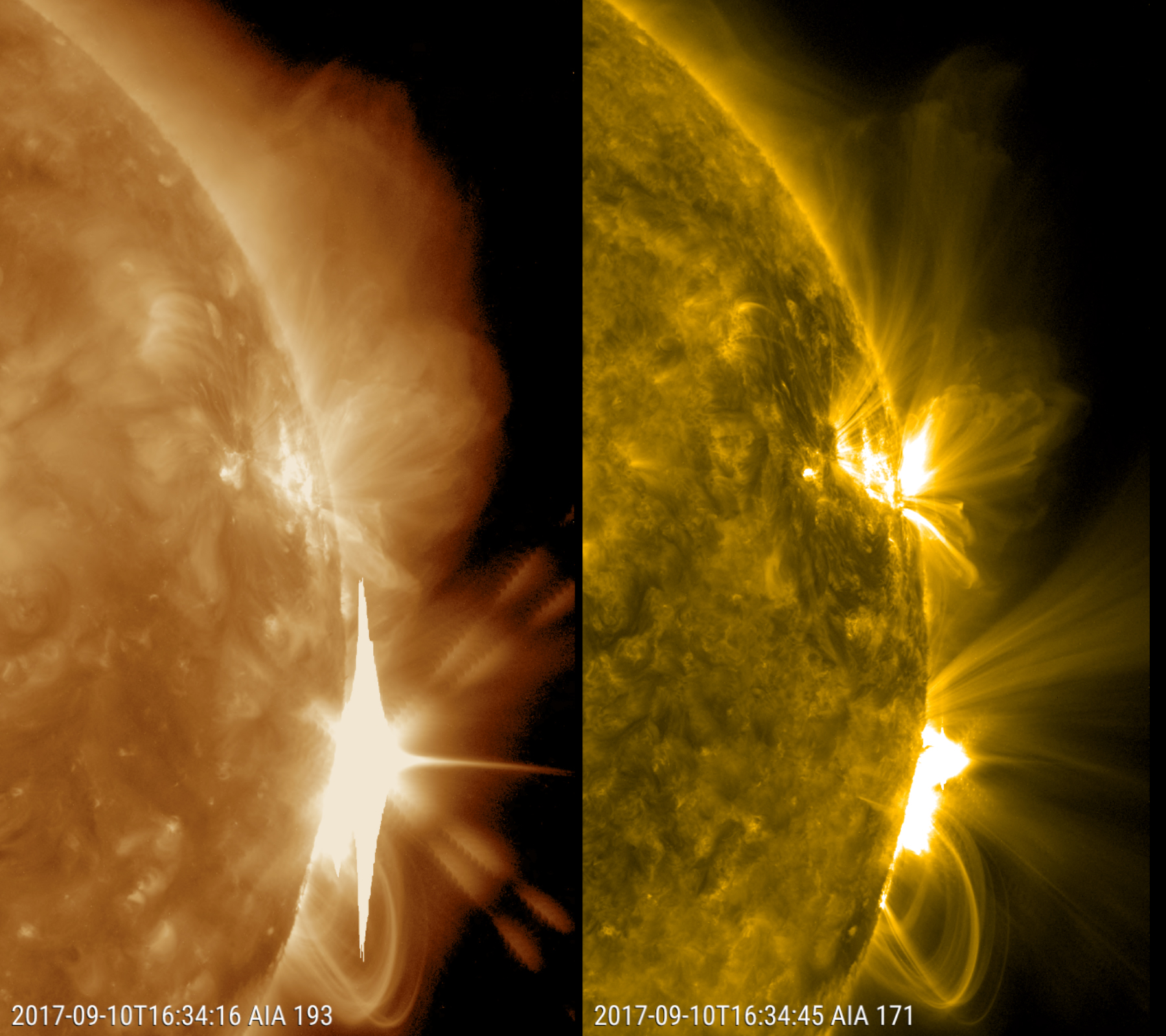
- Solar energetic particles (SEP) — bursts thrown out by solar flares and coronal mass ejections. They are not constant, but a big event can be intense enough to be dangerous in a matter of hours. The good news is that SEP are much easier to block: a dedicated storm shelter with enough mass around it can shield a crew through the worst of an event.
The August 1972 storm
In August 1972 the Sun produced a solar particle event so strong that, had astronauts been in transit or on the lunar surface, an unshielded crew could have received a dangerous dose. It happened to fall between the Apollo 16 and Apollo 17 missions — a near-miss that is still cited as the clearest warning of why any Mars crew needs a storm shelter, not just average shielding.
04The actual numbers
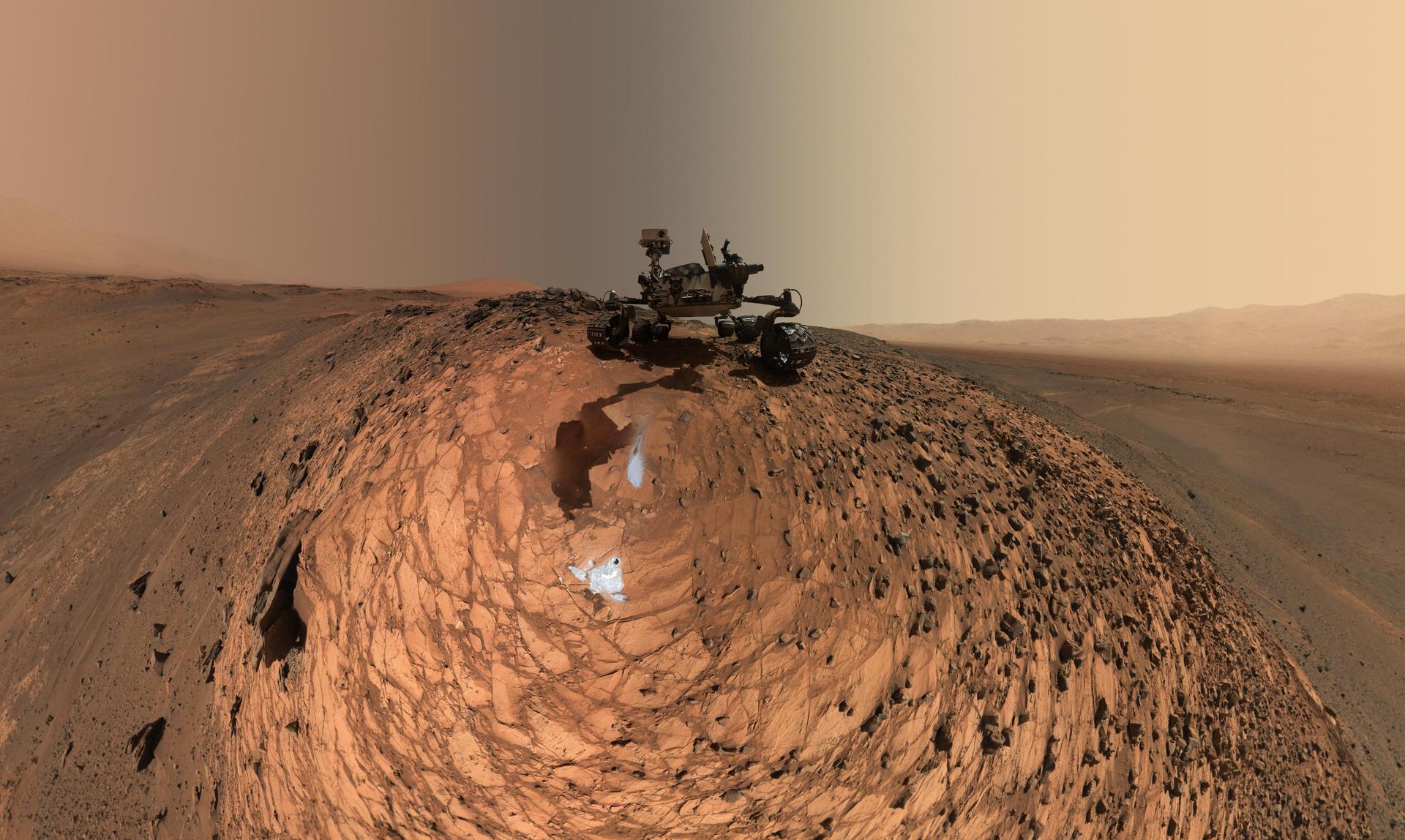
Before Curiosity, the doses of a Mars trip were modelled but never measured with a human-relevant detector on the actual route. RAD changed that: it recorded the radiation environment inside the spacecraft on the way to Mars and then on the surface of Gale crater. Here is how those figures compare with more familiar exposures.
| Exposure | Dose | Note |
|---|---|---|
| Earth, natural background | ~2.4 mSv/year | for scale |
| ISS astronaut, 6-month stay | ~150–300 mSv (~0.3 Sv) | low Earth orbit, partly shielded by Earth’s field |
| Deep-space cruise to Mars | ~1.8 mSv/day | Curiosity RAD; ~0.66 Sv over a round-trip cruise |
| Mars surface | ~0.64 mSv/day (~230 mSv/year) | Curiosity RAD |
| Full round-trip mission | ~1 Sv (≈1,000 mSv), estimated | ~180 days each way + ~500 days on the surface |
These figures come from NASA’s RAD instrument on Curiosity, reported by Zeitlin et al. (2013) for the cruise to Mars and Hassler et al. (2014) for the surface at Gale crater. The round-trip total of about 1 Sv assumes roughly 180 days of transit each way plus around 500 days on the surface — the natural shape of a mission timed to the launch windows. Change the mission length or shielding and the total moves, but the order of magnitude is set by these measurements.
05What that dose does to the body
The dominant long-term concern is not acute illness but an elevated lifetime risk of cancer. A dose approaching 1 Sv, accumulated over months, does not cause the dramatic effects of a single massive exposure — instead it raises the statistical odds that a crew member develops cancer later in life. That is a real and measurable cost, and it is the main reason radiation limits are framed around cancer risk rather than immediate symptoms.
Beyond cancer, researchers are still studying other possible effects of long-duration exposure: damage to the central nervous system, cataracts in the eyes, and effects on the cardiovascular system. These are less certain and remain active areas of study rather than settled facts. And in one scenario the danger becomes immediate — a large solar storm that caught a crew without adequate shielding could deliver enough dose quickly enough to cause acute radiation sickness. That is precisely the case a storm shelter is designed to prevent.
06NASA’s radiation limits
NASA does not treat astronaut radiation as open-ended. Historically it capped an astronaut’s career risk at a 3% risk-of-exposure-induced-death (REID) — meaning no mission should raise a crew member’s chance of dying from radiation-induced cancer by more than 3%. In 2021 the agency moved toward a simpler single career limit of about 600 mSv effective dose for all astronauts.
Now compare that with the numbers above. A Mars round trip is estimated at around 1 Sv — that is roughly 1,000 mSv, well past the ~600 mSv career limit. In other words, a single Mars mission would approach or exceed the dose NASA currently allows an astronaut to accumulate across an entire career. That gap is not a reason the mission is impossible; it is exactly why radiation is treated as a central design problem to be engineered down, and why crews may need to accept a formally elevated risk.
07How to shield a Mars base

On the surface, the cheapest and most effective shield is already there: the ground. The leading approaches all put mass between the crew and the sky.
- Regolith cover — piling several metres of Martian soil over a habitat, so the crew lives under a thick layer of natural shielding rather than a thin pressurized shell.
- Building underground — burying habitats outright, which also stabilizes temperature against the huge day-to-night swing.
- Lava tubes and caves — using natural underground voids that Mars already has, saving the work of excavation.
- Water and hydrogen-rich plastics — water walls and polyethylene are especially effective, because light hydrogen-rich materials stop space radiation better per kilogram than dense metals.
- A dedicated storm shelter — a small, heavily shielded room the crew retreats to during a solar particle event, when the dose rate spikes for hours.
08Shielding the journey
The transit is the harder half of the problem. In deep space there is no planet to hide behind, so the crew is exposed on all sides — and the dose rate (~1.8 mSv/day) is higher than on the surface. The obvious fix, thick shielding, runs straight into physics: mass is heavy, and every extra tonne is expensive to launch. So plans lean on materials that are already on board.
- Hydrogen-rich materials, water walls and stored supplies — food, water and propellant packed around a small central shelter, so the mass the crew has to carry anyway doubles as shielding.
- A short transit — the simplest countermeasure is time. Faster propulsion that cuts the ~180-day cruise reduces the total dose directly, which is one reason travel time and radiation are linked problems.
- Timing the solar cycle — flying when solar activity works in the crew’s favour, weighing the GCR background against the risk of solar storms.
- Research countermeasures — radioprotective drugs and experimental active magnetic shielding (an artificial magnetic field around the ship) are being studied, though neither is flight-ready today.
09Frequently asked questions
Can humans survive the radiation on Mars?
Yes, it is considered survivable with proper shielding and mission design — but at the cost of an elevated lifetime cancer risk. Radiation is a serious hazard, not an absolute barrier that makes a Mars trip impossible.
How much radiation would you get on the way to Mars?
About 1.8 mSv per day during the deep-space cruise, as measured by Curiosity’s RAD instrument. Over a round-trip cruise that adds up to roughly 0.66 Sv.
How much radiation is there on the Martian surface?
About 0.64 mSv per day, or roughly 230 mSv per year, according to Curiosity’s RAD data from Gale crater. It is lower than in deep space because the planet itself blocks about half the sky.
How does Mars radiation compare with Earth and the ISS?
On Earth the natural background is about 2.4 mSv per year. A six-month ISS stay is roughly 150–300 mSv (~0.3 Sv). A full Mars round trip is estimated near 1 Sv — far more than either, which is why it dominates mission planning.
What is the difference between cosmic rays and solar radiation?
Galactic cosmic rays (GCR) are constant, very high-energy particles from beyond the Solar System that are hard to shield and worse at solar minimum. Solar energetic particles (SEP) are bursts from solar flares — intense but occasional, and shieldable with a storm shelter.
Would a solar storm kill astronauts?
A large solar particle event could deliver a dangerous dose to an unshielded crew and cause acute radiation sickness. The August 1972 storm, which fell between Apollo 16 and 17, is the classic example — which is exactly why every Mars plan includes a dedicated storm shelter.
Does Mars have a magnetic field?
Not a global one. Mars lost its planet-wide magnetic field billions of years ago, so there is nothing to deflect charged particles the way Earth’s magnetosphere does. That, plus the thin atmosphere, is why the surface is so exposed.
How do you shield against radiation on Mars?
On the surface, cover habitats with several metres of regolith, build underground, or use lava tubes; water and hydrogen-rich plastics like polyethylene are effective shields, and a storm shelter handles solar events. In transit, mass is expensive, so plans pack water and supplies around a small shelter and keep the trip short.
Why build underground or use lava tubes?
A few metres of rock or soil is one of the cheapest, most effective radiation shields available, and it also smooths out the huge day-to-night temperature swing. Natural lava tubes provide that shielding without the work of excavation.
What is NASA’s radiation dose limit for astronauts?
NASA historically capped astronaut risk at a 3% risk-of-exposure-induced-death (REID), and in 2021 moved toward a single career limit of about 600 mSv effective dose. A Mars round trip (~1 Sv) approaches or exceeds that.
Does Mars radiation cause cancer?
The dominant long-term effect of the accumulated dose is an elevated lifetime risk of cancer rather than immediate illness. Possible effects on the central nervous system, eyes and cardiovascular system are still being studied.
Can we block cosmic rays completely?
Not easily. Galactic cosmic rays are so energetic that stopping them fully would take impractical amounts of mass, and thin shielding can even produce secondary particles. The realistic aim is to reduce the dose with hydrogen-rich shielding and a short mission, not to eliminate it.
Does going to Mars faster help with radiation?
Yes, directly. Most of the transit dose accumulates day by day, so faster propulsion that shortens the ~180-day cruise cuts the total exposure. That is one reason travel time and radiation are treated as linked problems.