Mars · missions
Mars Missions
Every mission that reached Mars — flybys, orbiters, landers and rovers. Tap any entry to expand.
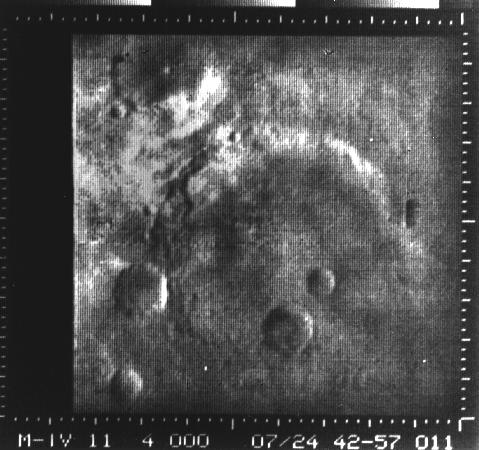
Mariner 4
Mariner 4 was NASA's first successful mission to Mars and the first spacecraft ever to fly past the planet and return close-up photographs of another world. Launched on 28 November 1964, it swept past Mars on 14–15 July 1965, transmitting the first pictures of a planet taken from deep space.
The probe returned 21 usable images (plus a partial 22nd) that covered roughly 1% of the surface and revealed a cratered, Moon-like landscape. It also measured a surprisingly thin atmosphere, with a surface pressure of about 4–7 millibars, and detected no significant global magnetic field.
The results reshaped humanity's picture of Mars: the cratered, arid terrain put an end to lingering hopes of canals, lush vegetation or an Earth-like world. Contact with the spacecraft was maintained until 1967.
Key facts
- Operator
- NASA
- Type
- Flyby
- Launch
- 28 Nov 1964
- Flyby
- 14–15 Jul 1965
- Images returned
- 21 usable
- Surface pressure
- ~4–7 mbar
- Contact ended
- 1967
Highlights
- First spacecraft to fly by Mars and photograph another planet up close.
- Returned 21 usable images covering about 1% of the surface.
- Revealed a cratered, Moon-like terrain.
- Measured a thin atmosphere and found no global magnetic field.
- Ended long-held hopes of canals and vegetation on Mars.
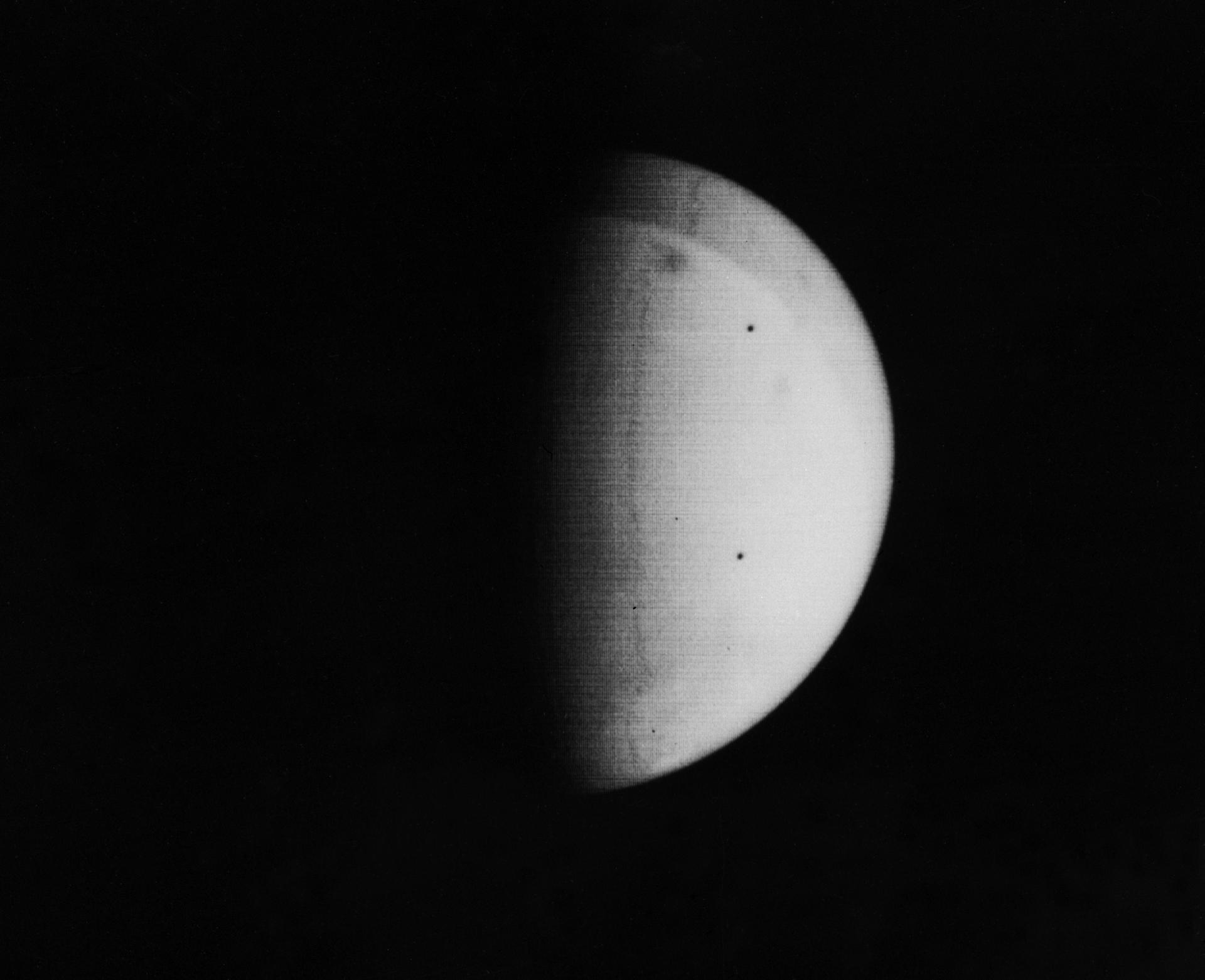
Mariner 9
Mariner 9 became the first spacecraft to orbit another planet. Launched on 30 May 1971, it entered Mars orbit on 14 November 1971, arriving just as a planet-wide dust storm engulfed the surface.
The orbiter waited weeks for the dust to settle before beginning its survey. Once the skies cleared, it mapped about 85% of the Martian surface and returned 7,329 images, transforming Mars from a blurry disc into a mapped world.
Its discoveries were landmark: the giant volcano Olympus Mons, the immense canyon system later named Valles Marineris after the Mariner program, the Tharsis volcanoes, and dry river channels hinting at a wetter past. The mission operated until October 1972.
Key facts
- Operator
- NASA
- Type
- Orbiter
- Launch
- 30 May 1971
- Orbit insertion
- 14 Nov 1971
- Surface mapped
- ~85%
- Images returned
- 7,329
- Operated until
- October 1972
Highlights
- First spacecraft ever to orbit another planet.
- Rode out a planet-wide dust storm before mapping the surface.
- Mapped about 85% of Mars and returned 7,329 images.
- Discovered Olympus Mons and the Valles Marineris canyon system.
- Found dry river channels hinting at a wetter Martian past.
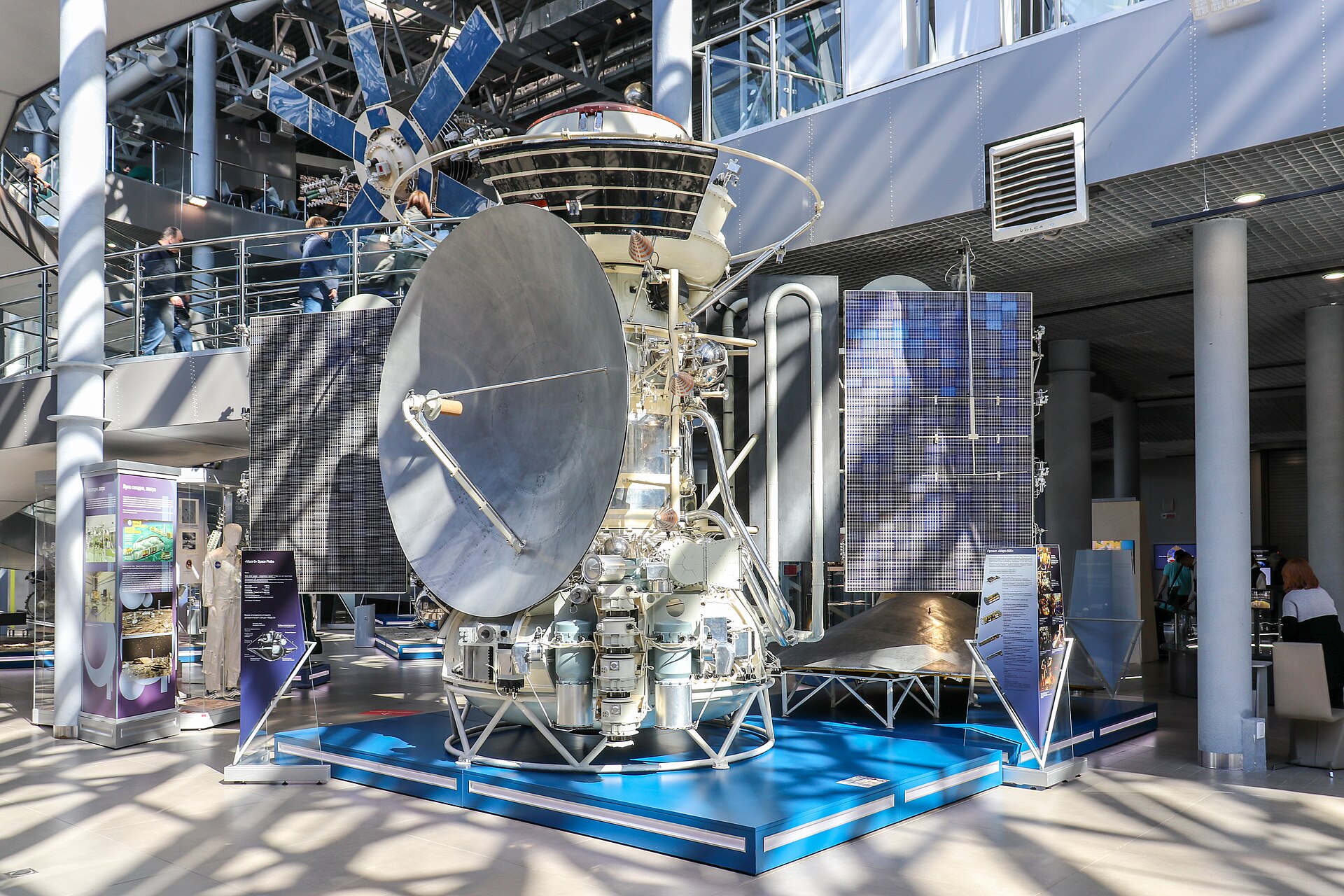
Mars 2
Mars 2 was one of a pair of Soviet orbiter-and-lander craft sent in 1971. Its descent module reached Mars on 27 November 1971 but its landing system failed during a raging global dust storm, and it crashed — becoming the first human-made object to reach the surface of Mars, even if it never worked there.
The orbiter, however, was a success: it entered orbit and returned data and images over the following months, part of an intensive Soviet campaign to study the planet.
Key facts
- Operator
- USSR
- Type
- Lander + orbiter
- Launch
- 19 May 1971
- Lander arrival
- 27 Nov 1971 (crashed)
- Outcome
- Lander lost; orbiter returned data
Highlights
- First human-made object to reach the Martian surface.
- Lander lost during a planet-wide dust storm.
- Its orbiter succeeded and returned data.
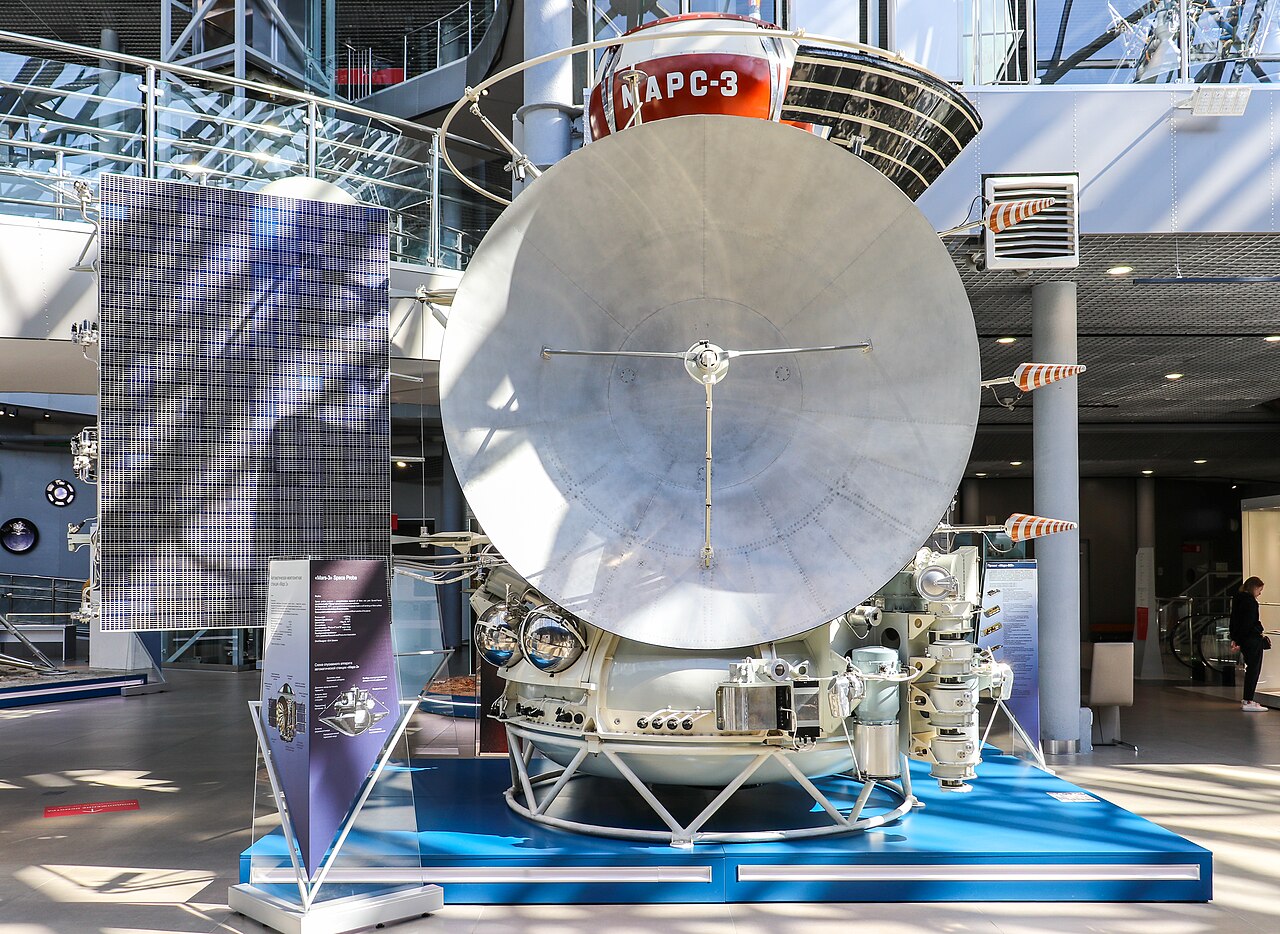
Mars 3
Mars 3 was a Soviet mission built as an orbiter-and-lander pair. Launched on 28 May 1971, its lander touched down on 2 December 1971 — the first-ever soft landing on the surface of Mars.
The lander began transmitting but fell silent after about 20 seconds, most likely overwhelmed by a raging global dust storm. The brief, featureless signal is regarded as the first-ever transmission from the Martian surface.
While the lander was lost almost immediately, the Mars 3 orbiter continued to operate and returned data from around the planet.
Key facts
- Operator
- USSR
- Type
- Lander (orbiter + lander)
- Launch
- 28 May 1971
- Landing
- 2 Dec 1971
- Signal duration
- ~20 seconds
- Outcome
- Lost after landing
Highlights
- Achieved the first-ever soft landing on Mars.
- Sent the first transmission from the Martian surface.
- Fell silent after about 20 seconds, likely defeated by a global dust storm.
- The signal was too brief to return a usable image.
- The Mars 3 orbiter kept operating and returned data.
Viking 1
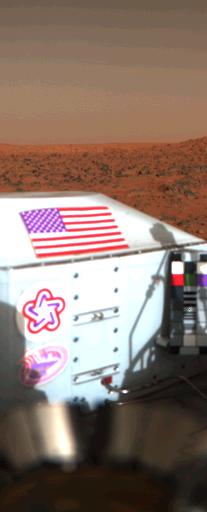
Viking 1 delivered the first fully successful landing on Mars. Its orbiter reached the planet on 19 June 1976, and after a careful search for a safe site the lander touched down in Chryse Planitia on 20 July 1976 — returning the first pictures ever taken from the Martian surface.
The lander photographed its surroundings, tracked the weather and ran a suite of biology experiments searching for microbial life in the soil; the results were famously inconclusive. It kept working for more than six years — a longevity record for a Mars surface mission until Opportunity — with the last contact in November 1982.
Key facts
- Operator
- NASA
- Type
- Lander + orbiter
- Launch
- 20 Aug 1975
- Landing
- 20 Jul 1976
- Landing site
- Chryse Planitia
- Last contact
- November 1982
Highlights
- First fully successful landing on Mars.
- Returned the first images from the Martian surface.
- Ran the Viking biology experiments — famously inconclusive.
- Operated for over six years, a longevity record of its era.
Viking 2
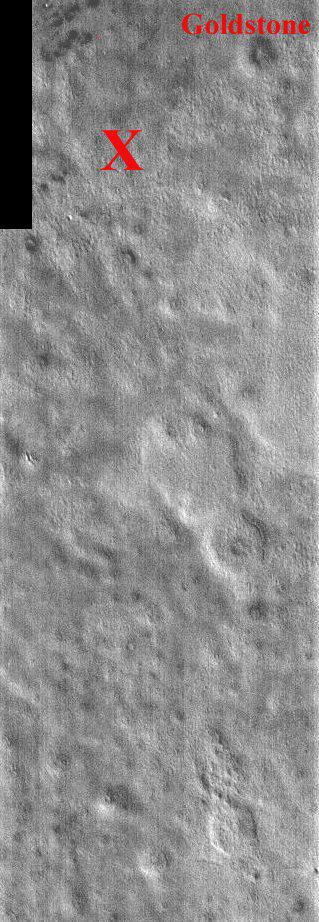
Viking 2 was the twin of Viking 1 — an orbiter-and-lander pair launched in 1975. Its lander touched down in Utopia Planitia on 3 September 1976, on the opposite side of the planet from Viking 1, giving scientists two very different surface sites to compare.
It returned thousands of images, tracked frost and weather through the seasons and repeated the biology experiments that searched the soil for life. The lander operated until April 1980 and its orbiter until July 1978.
Key facts
- Operator
- NASA
- Type
- Lander + orbiter
- Launch
- 9 Sep 1975
- Landing
- 3 Sep 1976
- Landing site
- Utopia Planitia
Highlights
- Second successful Mars landing, in Utopia Planitia.
- Gave a second surface site to compare with Viking 1.
- Observed frost and seasonal weather; ran biology experiments.
Mars Pathfinder
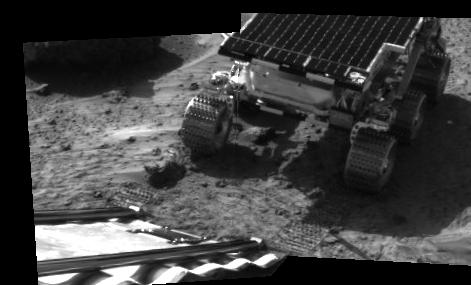
Mars Pathfinder bounced to a stop on air-filled cushions in Ares Vallis on 4 July 1997 — a low-cost demonstration of a radically new way to land. It released Sojourner, a microwave-oven-sized robot that became the first wheeled rover to drive on another planet.
The lander and rover ran for about three months, far beyond their short design life, returning more than 16,000 images and analysing rocks that pointed to a warmer, wetter past. Pathfinder proved airbag landings and rover operations that every later NASA rover would build on.
Key facts
- Operator
- NASA
- Type
- Lander + rover (Sojourner)
- Launch
- 4 Dec 1996
- Landing
- 4 Jul 1997
- Landing site
- Ares Vallis
Highlights
- Deployed Sojourner — the first rover to drive on Mars.
- Pioneered the airbag landing method.
- Returned 16,000+ images in a ~3-month mission.
Mars Global Surveyor
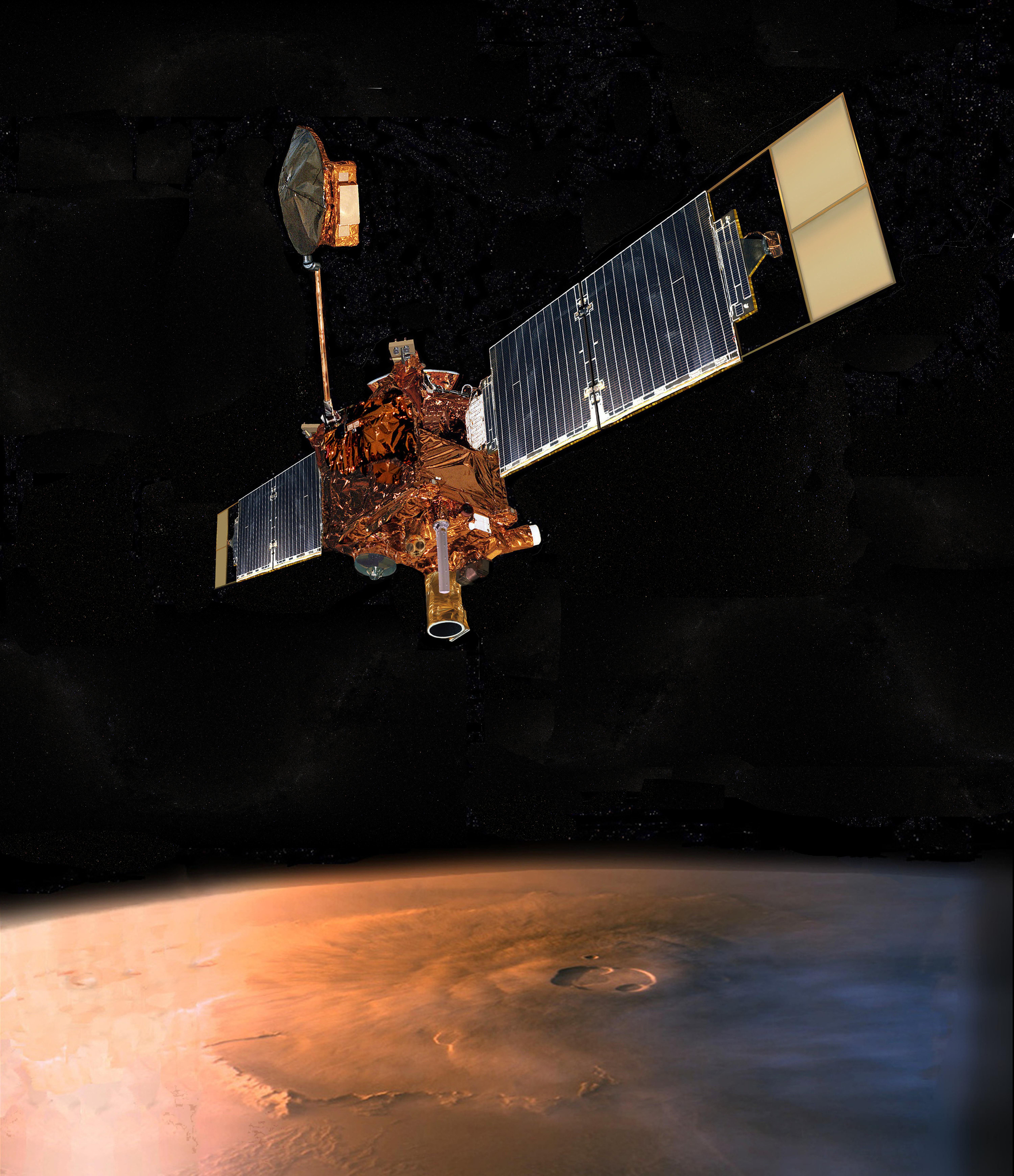
Mars Global Surveyor launched in 1996 and reached the planet on 11 September 1997, then used aerobraking to trim its orbit. It was the first fully successful US Mars mission since Viking and went on to map the planet for nearly a decade.
Its MOLA laser altimeter produced the definitive global topography of Mars, while the camera captured gullies, dust-storm behaviour and the grey hematite deposits that later steered Opportunity's landing site. Contact was lost in November 2006.
Key facts
- Operator
- NASA
- Type
- Orbiter
- Launch
- 7 Nov 1996
- Arrival
- 11 Sep 1997
- Key instruments
- MOLA, MOC, TES
- Contact lost
- November 2006
Highlights
- Produced the definitive global topography of Mars (MOLA).
- Imaged gullies and the hematite that guided Opportunity.
- Mapped the planet for nearly a decade.
Nozomi
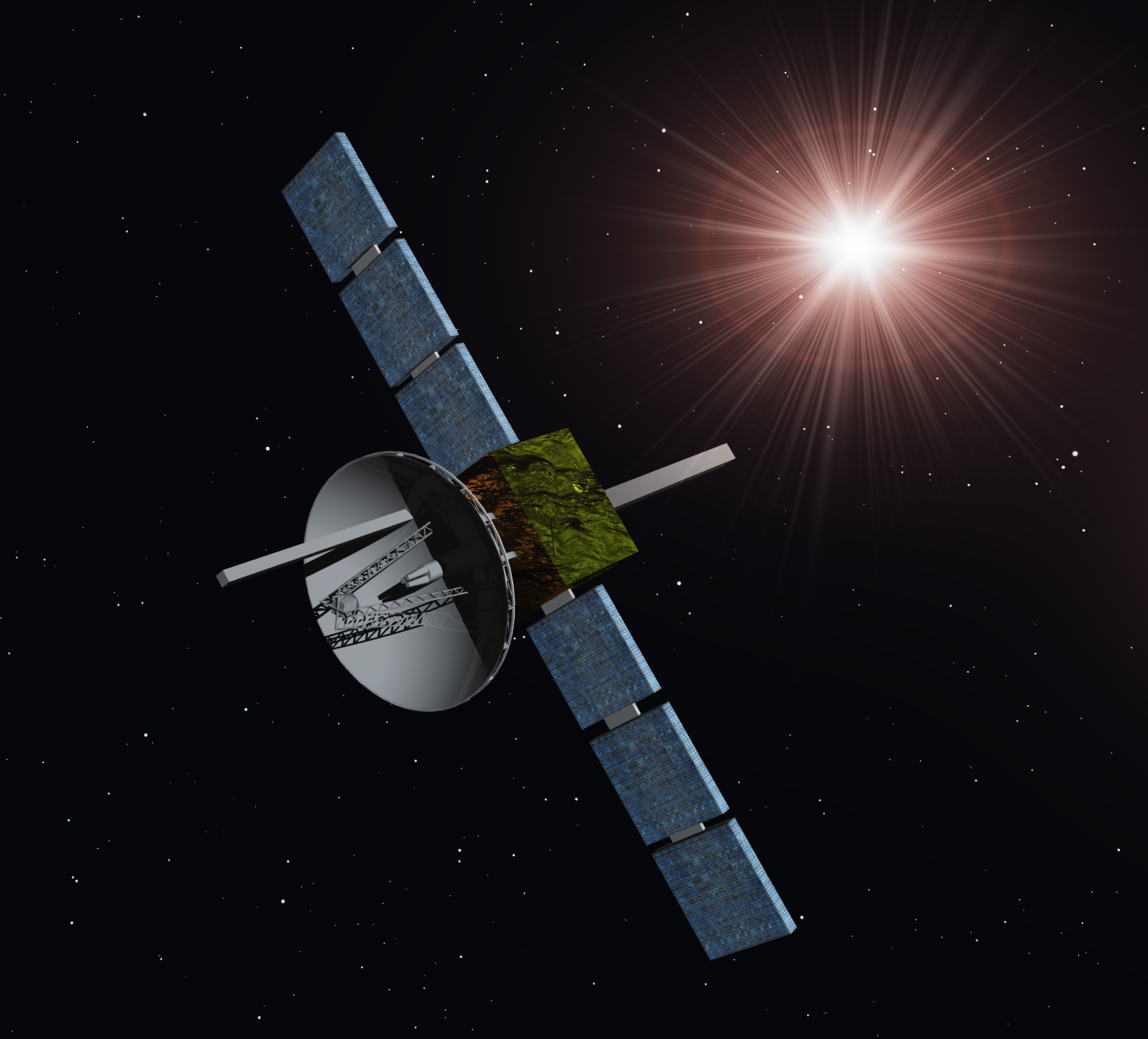
Nozomi ("Hope") was Japan's first mission to Mars, launched in 1998 to study the upper atmosphere. A stuck propulsion valve wasted fuel early on and forced a long, looping recovery trajectory back past Earth.
A powerful solar flare then damaged its electronics, and when Nozomi finally reached Mars in December 2003 it could not fire its engine to enter orbit. It flew past the planet instead — a near miss that nonetheless proved much of Japan's deep-space technology.
Key facts
- Operator
- ISAS (Japan)
- Type
- Orbiter (failed)
- Launch
- 3 Jul 1998
- Mars flyby
- December 2003
- Cause
- Propulsion + solar-flare damage
Highlights
- Japan's first mission to Mars.
- Fuel loss and a solar flare stopped orbit insertion.
- Flew past Mars in 2003 instead of orbiting.
Mars Climate Orbiter
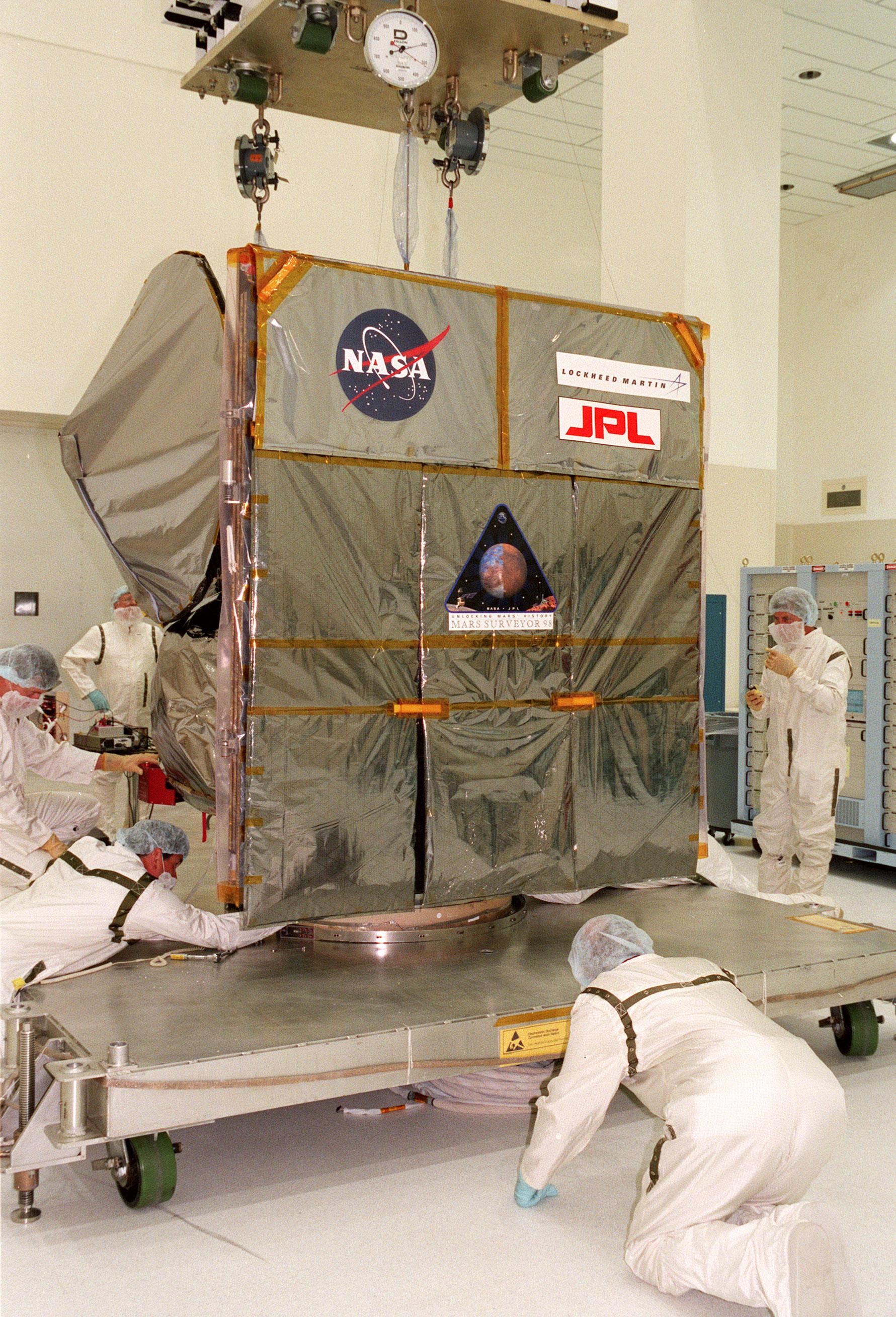
Mars Climate Orbiter was meant to study the planet's weather and act as a relay for Mars Polar Lander. It never got the chance: on 23 September 1999, as it fired to enter orbit, it dipped far too low into the atmosphere and was torn apart.
The cause became a textbook engineering lesson: one team's software used imperial units (pound-force-seconds) while the navigation system expected metric (newton-seconds), so the trajectory was wrong by enough to doom the craft.
Key facts
- Operator
- NASA
- Type
- Orbiter (failed)
- Launch
- 11 Dec 1998
- Lost
- 23 Sep 1999
- Cause
- Metric / imperial unit mix-up
Highlights
- Lost entering orbit in 1999.
- Doomed by a metric-vs-imperial units error.
- A textbook lesson in software and process discipline.

Mars Polar Lander
Mars Polar Lander aimed to set down near the edge of the south polar cap in December 1999 to study ice and climate. Contact was lost during the final descent on 3 December 1999 and never regained.
The leading explanation is that a spurious signal from the landing legs made the flight software cut the engines while the lander was still tens of metres up, dropping it to the surface. Two small Deep Space 2 penetrators riding along were also lost.
Key facts
- Operator
- NASA
- Type
- Lander (failed)
- Launch
- 3 Jan 1999
- Lost
- 3 Dec 1999
- Likely cause
- Premature engine cutoff
Highlights
- Lost during its south-polar landing attempt.
- Likely a false touchdown signal cut the engines early.
- The Deep Space 2 penetrators were lost too.
Mars Odyssey
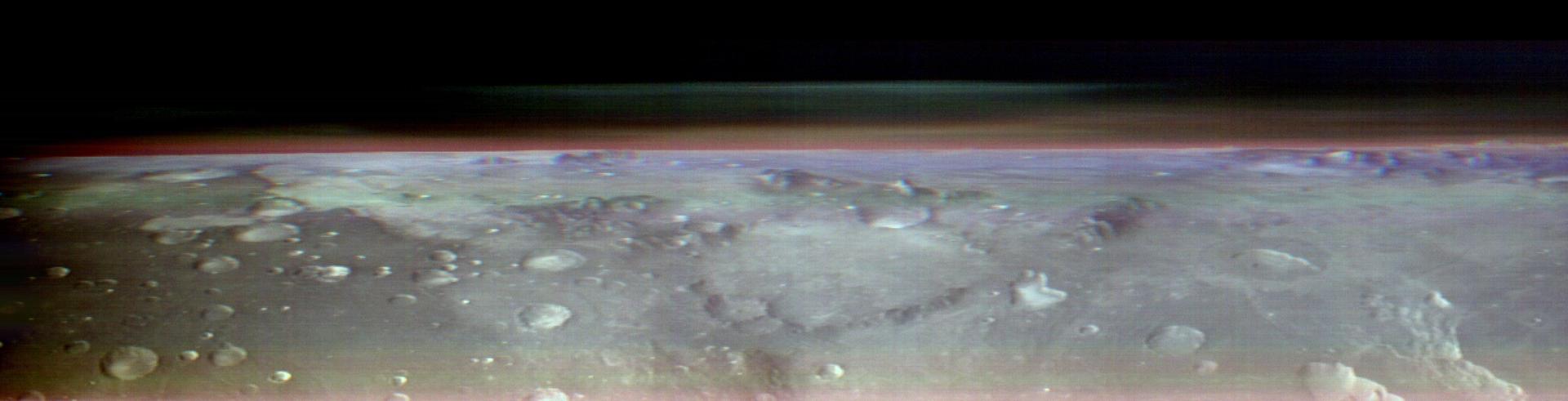
Mars Odyssey reached orbit on 24 October 2001 and has been working ever since — the longest-operating spacecraft ever at Mars. Its gamma-ray and neutron instruments mapped hydrogen just below the surface, revealing vast amounts of buried water ice.
THEMIS maps surface minerals and temperatures by day and night, and Odyssey serves as a vital data relay for the surface rovers. Decades on, it continues to return science and route rover data home.
Key facts
- Operator
- NASA
- Type
- Orbiter
- Launch
- 7 Apr 2001
- Orbit insertion
- 24 Oct 2001
- Status
- Active — longest-lived at Mars
Highlights
- Longest-operating spacecraft in Mars history.
- Mapped buried water ice via hydrogen detection.
- A key data relay for the surface rovers.
Mars Express
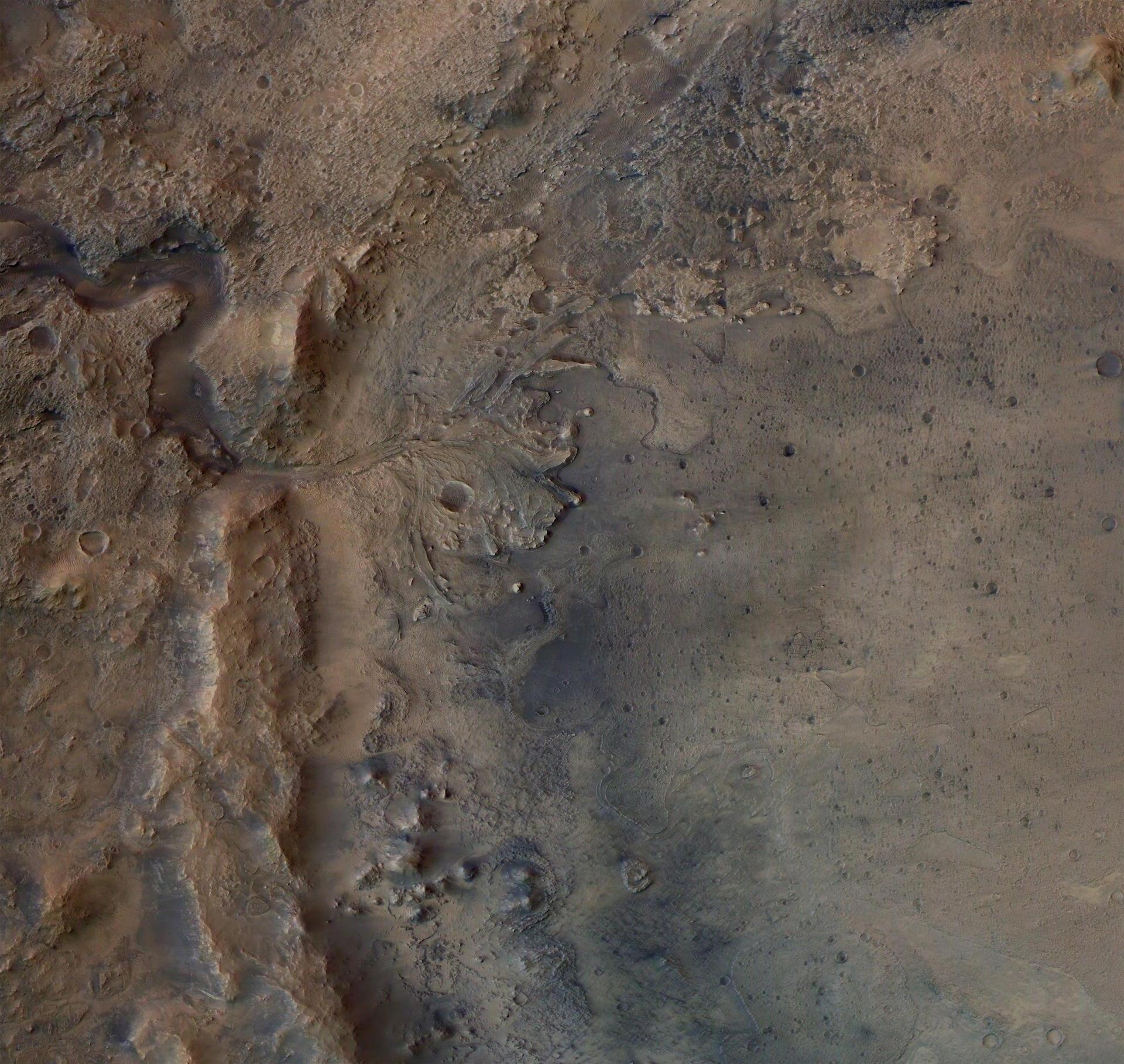
Mars Express was Europe's first mission to another planet, arriving on 25 December 2003. It carries the MARSIS subsurface radar and the HRSC stereo camera that has built spectacular three-dimensional maps of the Martian surface.
Its radar sounded the polar caps and returned evidence of water ice — and, controversially, possible bodies of liquid water beneath the south pole. It also brought Beagle 2 to Mars, and continues to operate two decades on.
Key facts
- Operator
- ESA
- Type
- Orbiter
- Launch
- 2 Jun 2003
- Orbit insertion
- 25 Dec 2003
- Key instruments
- MARSIS, HRSC
Highlights
- Europe's first mission to another planet.
- Radar evidence of polar water ice (and debated subglacial water).
- HRSC built detailed 3D maps of the surface.
Beagle 2
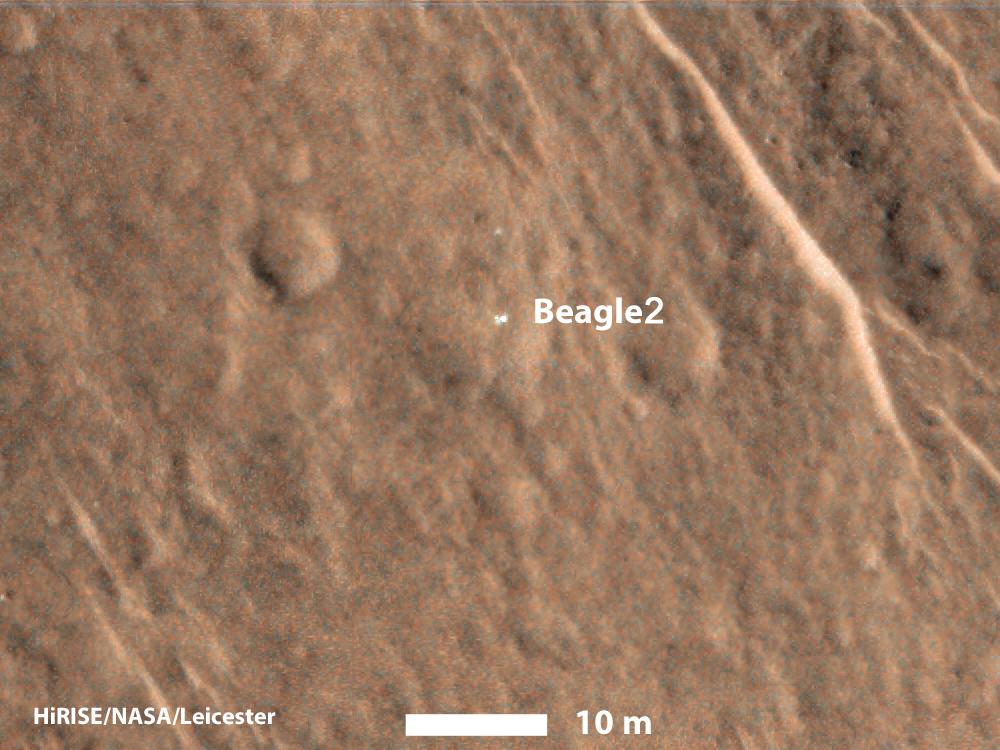
Beagle 2 was a small British-led lander carried to Mars aboard ESA's Mars Express. It was released and touched down in Isidis Planitia on 25 December 2003 — but it never returned a signal, and for over a decade its fate was a mystery.
In 2015, high-resolution images from NASA's Mars Reconnaissance Orbiter found Beagle 2 intact on the surface: it had landed successfully, but two of its four solar panels failed to unfold, blocking the antenna it needed to call home.
Key facts
- Operator
- ESA / UK
- Type
- Lander (failed)
- Carried by
- Mars Express
- Landing
- 25 Dec 2003
- Found
- 2015, by MRO imaging
Highlights
- Landed intact but couldn't deploy its antenna.
- Its fate was a mystery for over a decade.
- Found on the surface by orbiter imaging in 2015.
Spirit & Opportunity
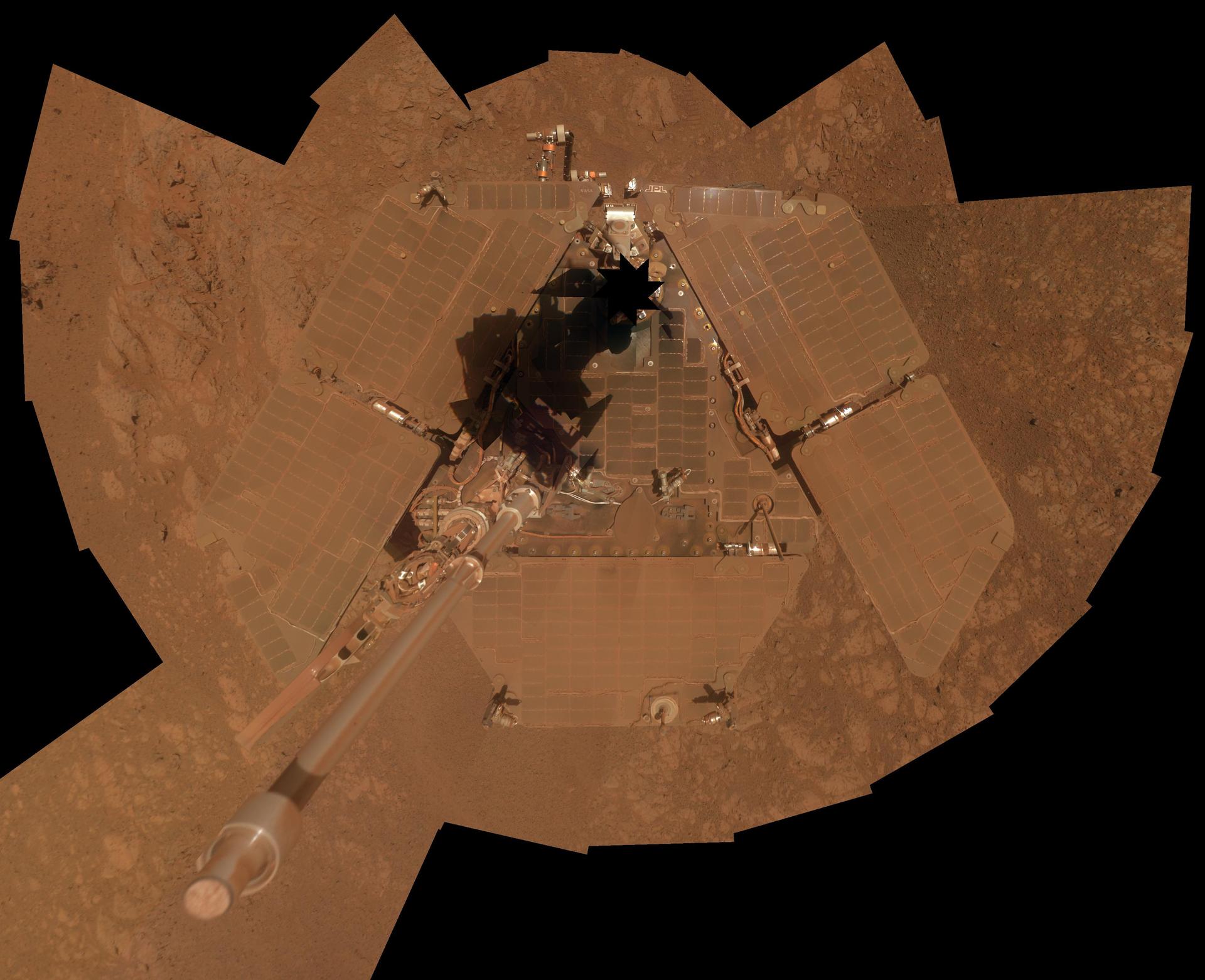
The Mars Exploration Rovers were twin geologists — Spirit landed in Gusev Crater on 4 January 2004 and Opportunity in Meridiani Planum on 25 January 2004. Each was designed to last just 90 sols, but both vastly outlived that plan.
They returned decisive evidence that liquid water once flowed on Mars — hematite spherules, sulfate salts and layered rocks. Spirit fell silent in 2010 after becoming stuck in soft soil; Opportunity drove a record 45 km over 14 years before a planet-wide dust storm ended its mission in 2018.
Key facts
- Operator
- NASA
- Type
- Twin rovers
- Landings
- January 2004
- Sites
- Gusev Crater / Meridiani Planum
- Opportunity distance
- 45.16 km
- Opportunity duration
- ~15 years
Highlights
- Twin rovers built for 90 sols — one lasted about 15 years.
- Found decisive evidence of ancient liquid water.
- Opportunity drove a record 45 km — the first off-Earth marathon.
- Ended by a planet-wide dust storm in 2018.
Mars Reconnaissance Orbiter
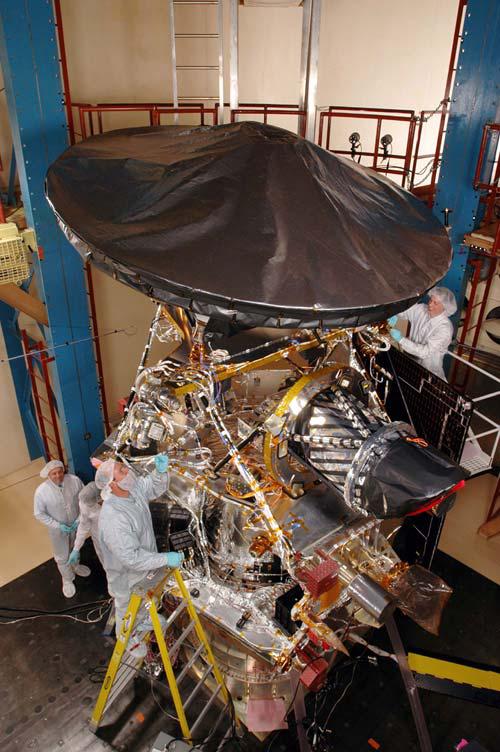
Mars Reconnaissance Orbiter entered orbit on 10 March 2006 and spent months aerobraking down into a low science orbit. It carries the most powerful instrument suite ever sent to Mars orbit.
Its HiRISE camera resolves surface features down to about 30 cm, CRISM maps minerals and SHARAD sounds buried ice. MRO is also the primary high-rate relay that carries data home from the surface rovers, and it remains active after well over 15 years.
Key facts
- Operator
- NASA
- Type
- Orbiter
- Launch
- 12 Aug 2005
- Orbit insertion
- 10 Mar 2006
- Key instruments
- HiRISE, CRISM, SHARAD
- Status
- Active
Highlights
- HiRISE — the sharpest camera at Mars (~30 cm/pixel).
- Maps surface minerals and sounds subsurface ice.
- Primary data relay for the surface rovers.
- Still operating after more than 15 years.
Phoenix
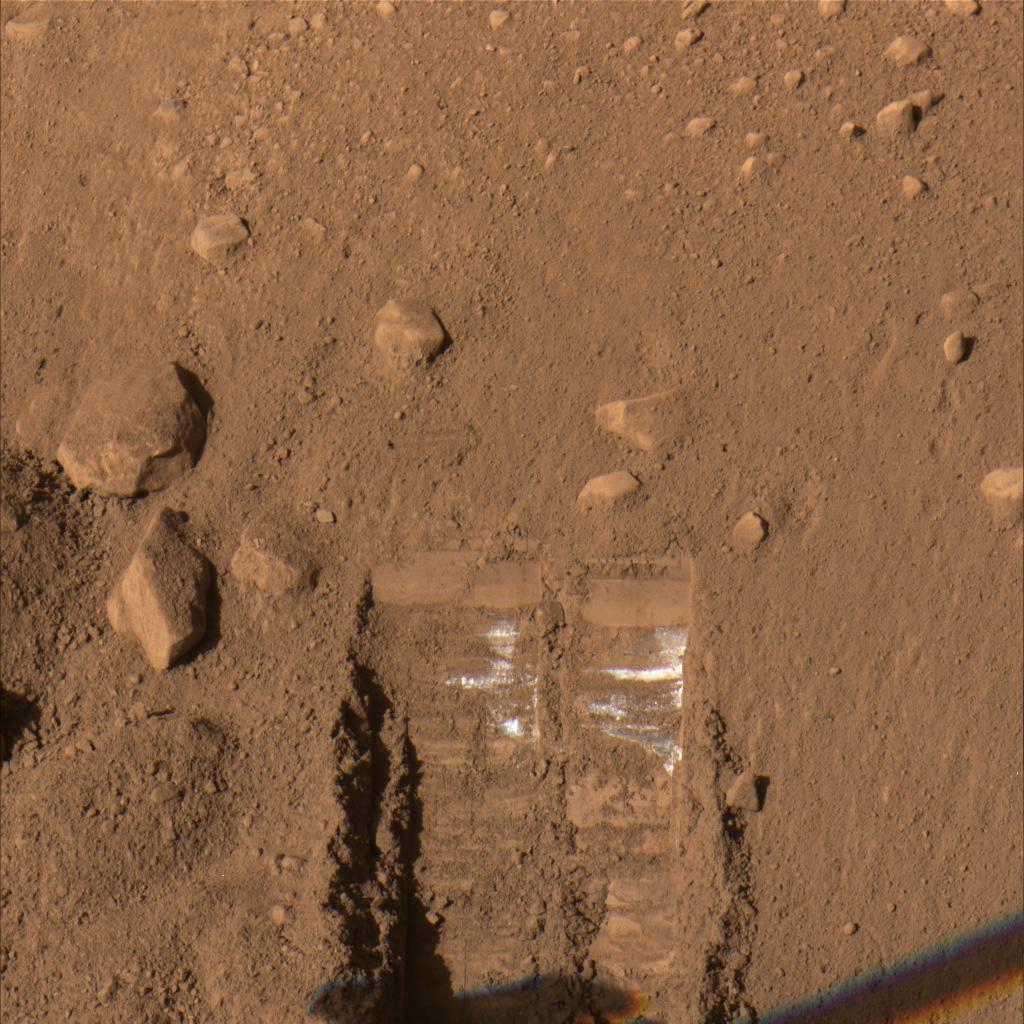
Phoenix landed on 25 May 2008 in the far northern plains — the first spacecraft to touch down in Mars's arctic. Rather than roam, it stayed put and used a robotic arm to dig into the icy soil right beneath it.
It exposed and confirmed water ice within centimetres of the surface, detected reactive perchlorate salts in the soil and even watched snow fall from clouds overhead. Solar-powered, it fell silent in November 2008 as the polar winter set in.
Key facts
- Operator
- NASA
- Type
- Lander
- Launch
- 4 Aug 2007
- Landing
- 25 May 2008
- Landing site
- Vastitas Borealis (~68°N)
Highlights
- First landing in the Martian arctic.
- Touched and confirmed near-surface water ice.
- Found perchlorates and observed snowfall.
Curiosity
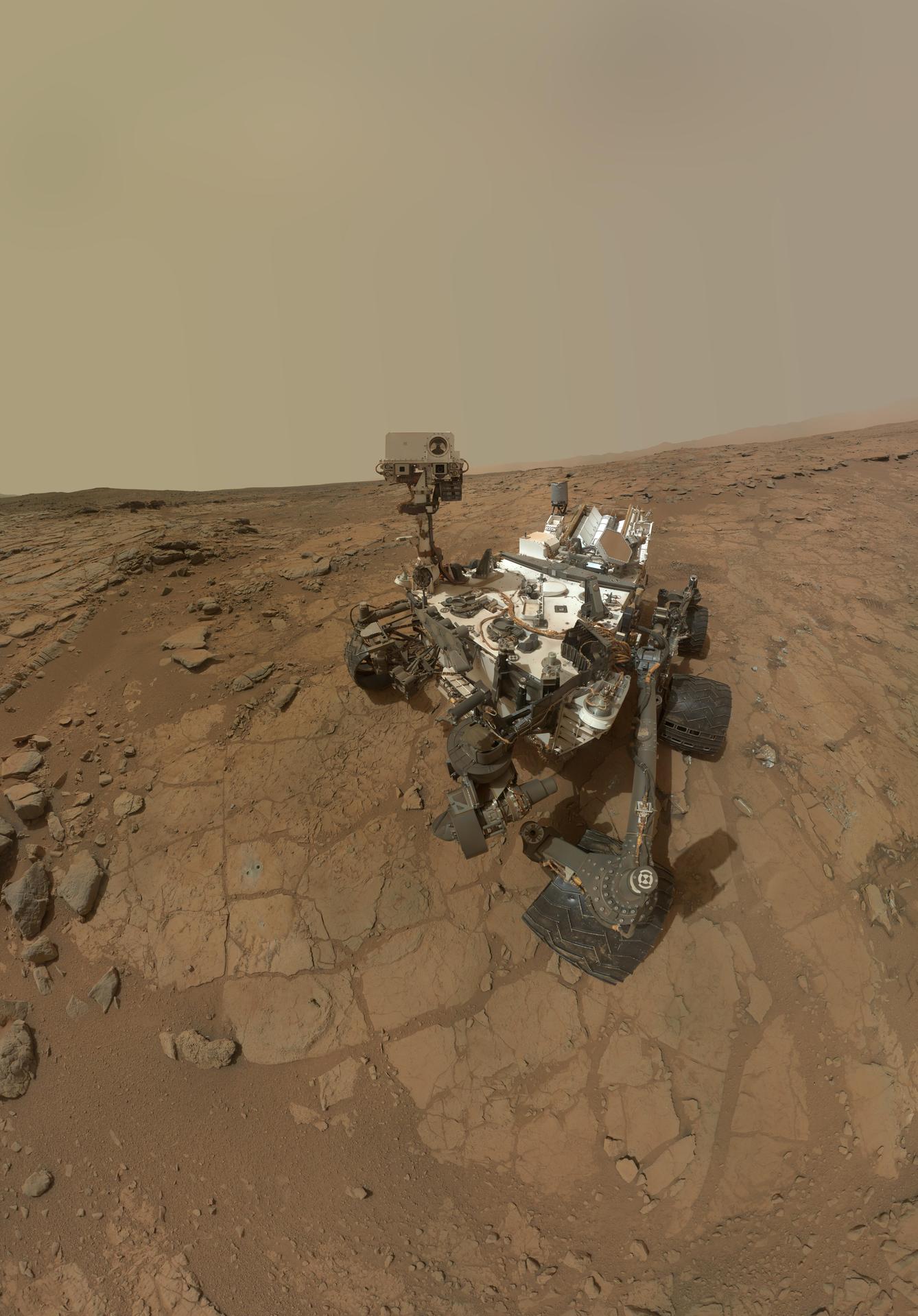
Curiosity is a car-sized, nuclear-powered rover that landed in Gale Crater on 6 August 2012 using the daring 'sky crane' manoeuvre. Its goal is to read the planet's habitability record layer by layer.
It confirmed that Gale Crater once held a long-lived, habitable freshwater lake, detected organic molecules in the mudstones and measured seasonal swings in atmospheric methane. Years on, it is still climbing the slopes of Mount Sharp.
Key facts
- Operator
- NASA
- Type
- Rover
- Launch
- 26 Nov 2011
- Landing
- 6 Aug 2012
- Landing site
- Gale Crater
- Power
- Nuclear (RTG)
Highlights
- Confirmed a past long-lived habitable lake in Gale Crater.
- Detected organic molecules and seasonal methane.
- Landed with the 'sky crane' manoeuvre.
- Still exploring, climbing Mount Sharp.
MAVEN
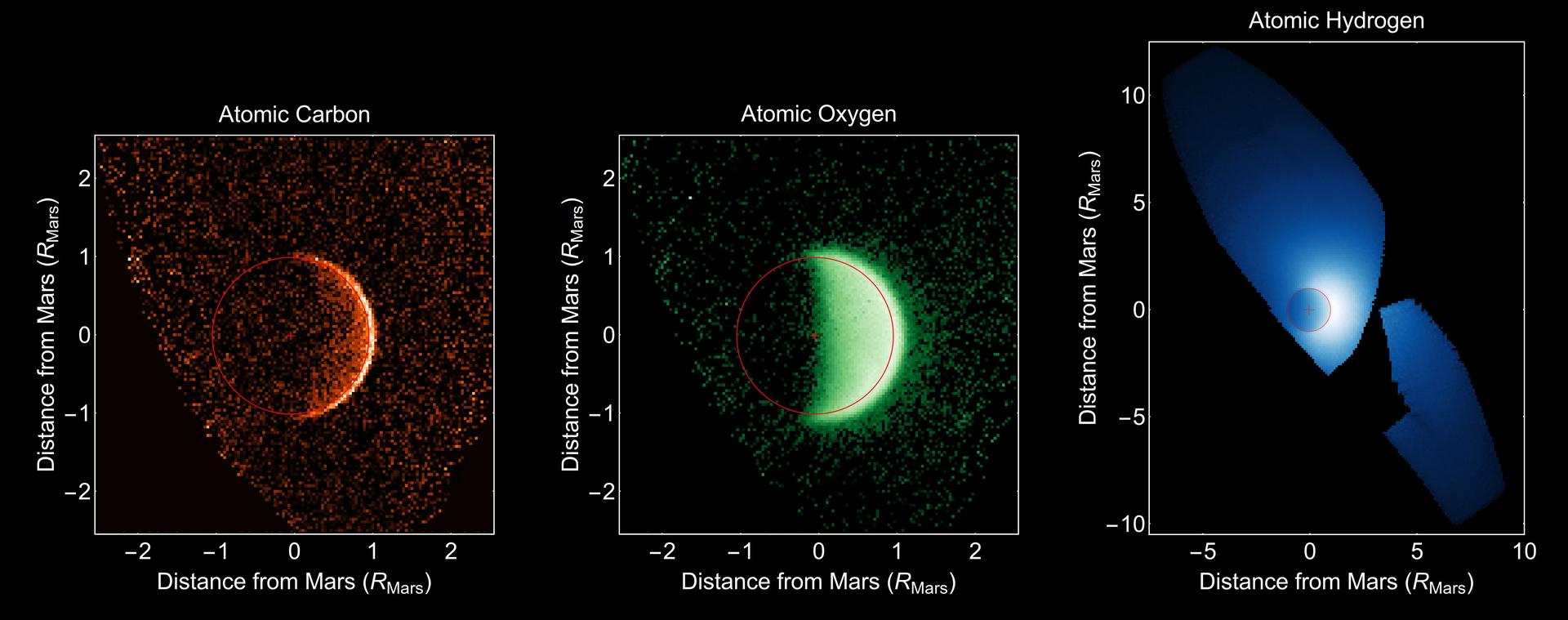
MAVEN entered orbit on 21 September 2014 with one central question: what happened to Mars's once-thick atmosphere? It flies through the upper atmosphere to measure how gas is escaping to space today.
Its data showed that the solar wind and solar storms have stripped away the bulk of the atmosphere over billions of years, driving the planet's shift from warm and wet to cold and dry. MAVEN also serves as a communications relay.
Key facts
- Operator
- NASA
- Type
- Orbiter
- Launch
- 18 Nov 2013
- Orbit insertion
- 21 Sep 2014
- Focus
- Atmospheric escape
Highlights
- Showed the solar wind stripped most of Mars's air.
- Explains the shift from a warm, wet world to a cold, dry one.
- Doubles as a communications relay.
Mangalyaan
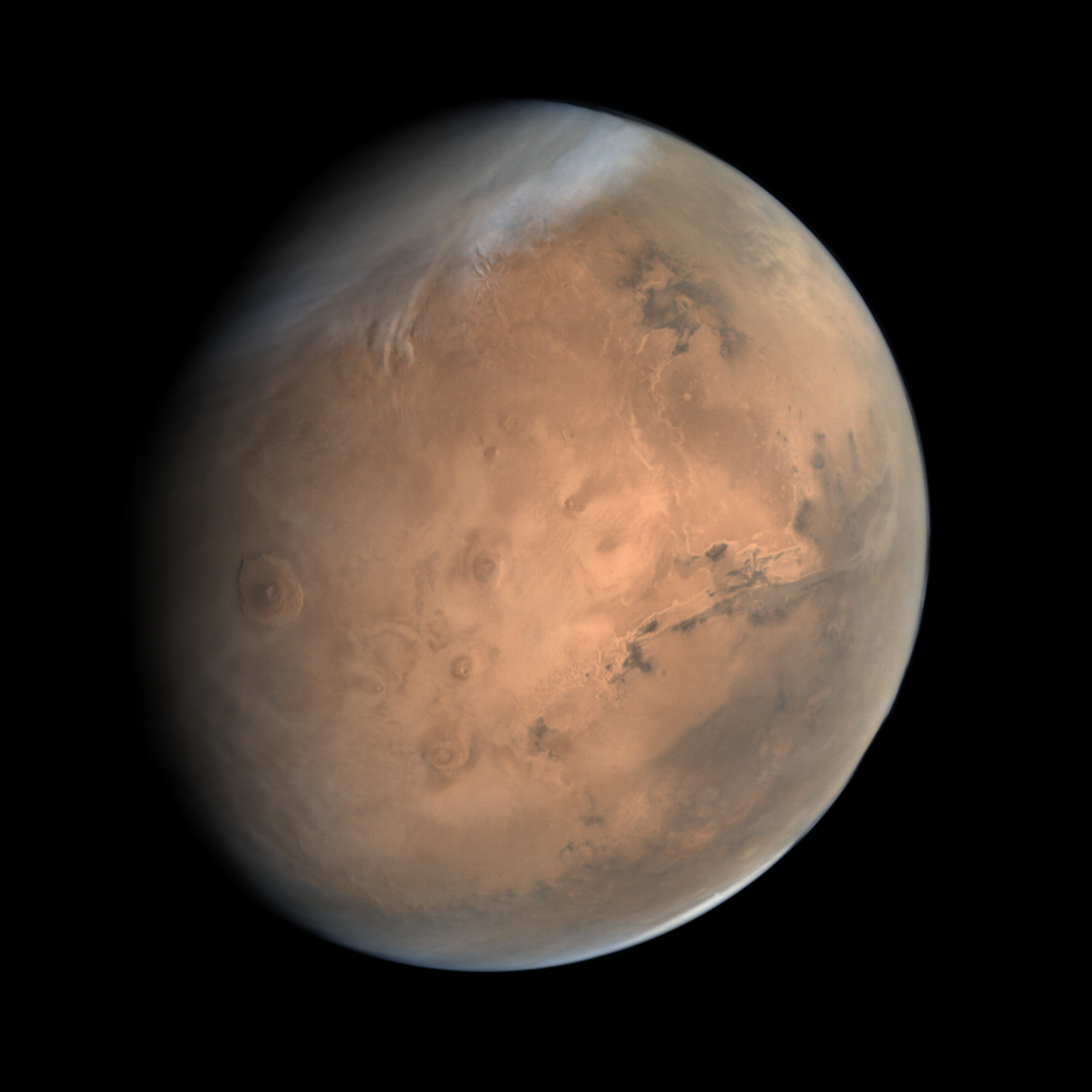
The Mars Orbiter Mission, nicknamed Mangalyaan, was India's first interplanetary spacecraft. Reaching orbit on 24 September 2014, ISRO became the first space agency to arrive at Mars on its very first attempt — and did so on a famously small budget of around $74 million.
Built largely as a technology demonstrator, it carried a small science payload including a methane sensor and a colour camera whose wide-angle views of the full disc of Mars became iconic. It operated for about eight years before contact was lost.
Key facts
- Operator
- ISRO
- Type
- Orbiter
- Launch
- 5 Nov 2013
- Orbit insertion
- 24 Sep 2014
- Approx. cost
- ~$74 million
Highlights
- India's first interplanetary mission.
- First agency to reach Mars orbit on its first attempt.
- Reached Mars on a famously low budget.
ExoMars TGO
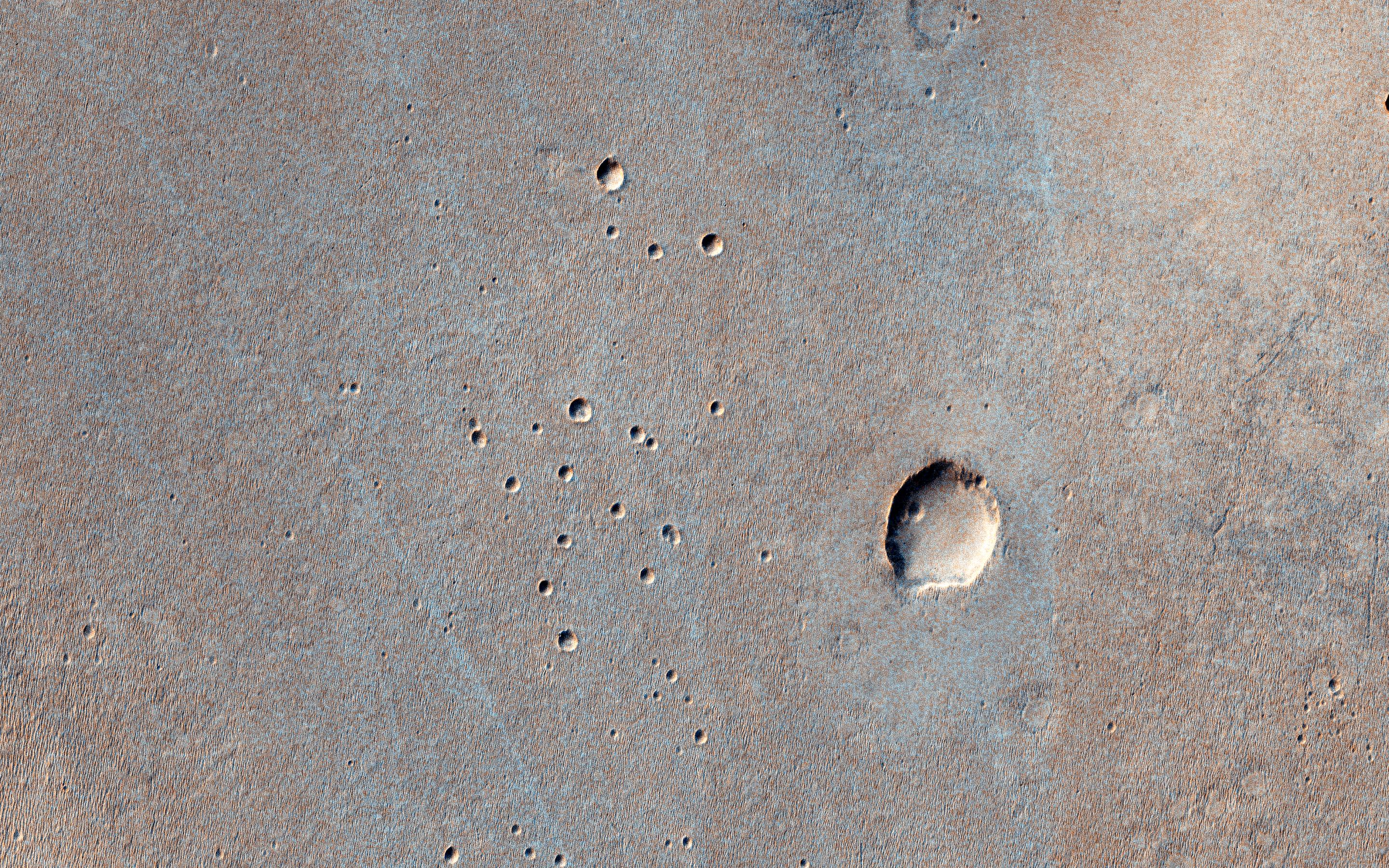
The ExoMars Trace Gas Orbiter arrived on 19 October 2016 to hunt for rare gases in the atmosphere — above all methane, which on Earth is often tied to life or active geology. It spent more than a year aerobraking into its science orbit.
TGO has measured surprisingly little methane, sharpening a long-standing puzzle, and it maps hydrogen (water) just below the surface. It also acts as the main data relay for surface missions. Its Schiaparelli demonstrator lander, however, was lost on landing in 2016.
Key facts
- Operator
- ESA (with Roscosmos)
- Type
- Orbiter
- Launch
- 14 Mar 2016
- Orbit insertion
- 19 Oct 2016
- Focus
- Trace gases (methane)
Highlights
- Traces atmospheric gases such as methane.
- Maps near-surface hydrogen (water).
- Primary data relay for surface missions.
InSight
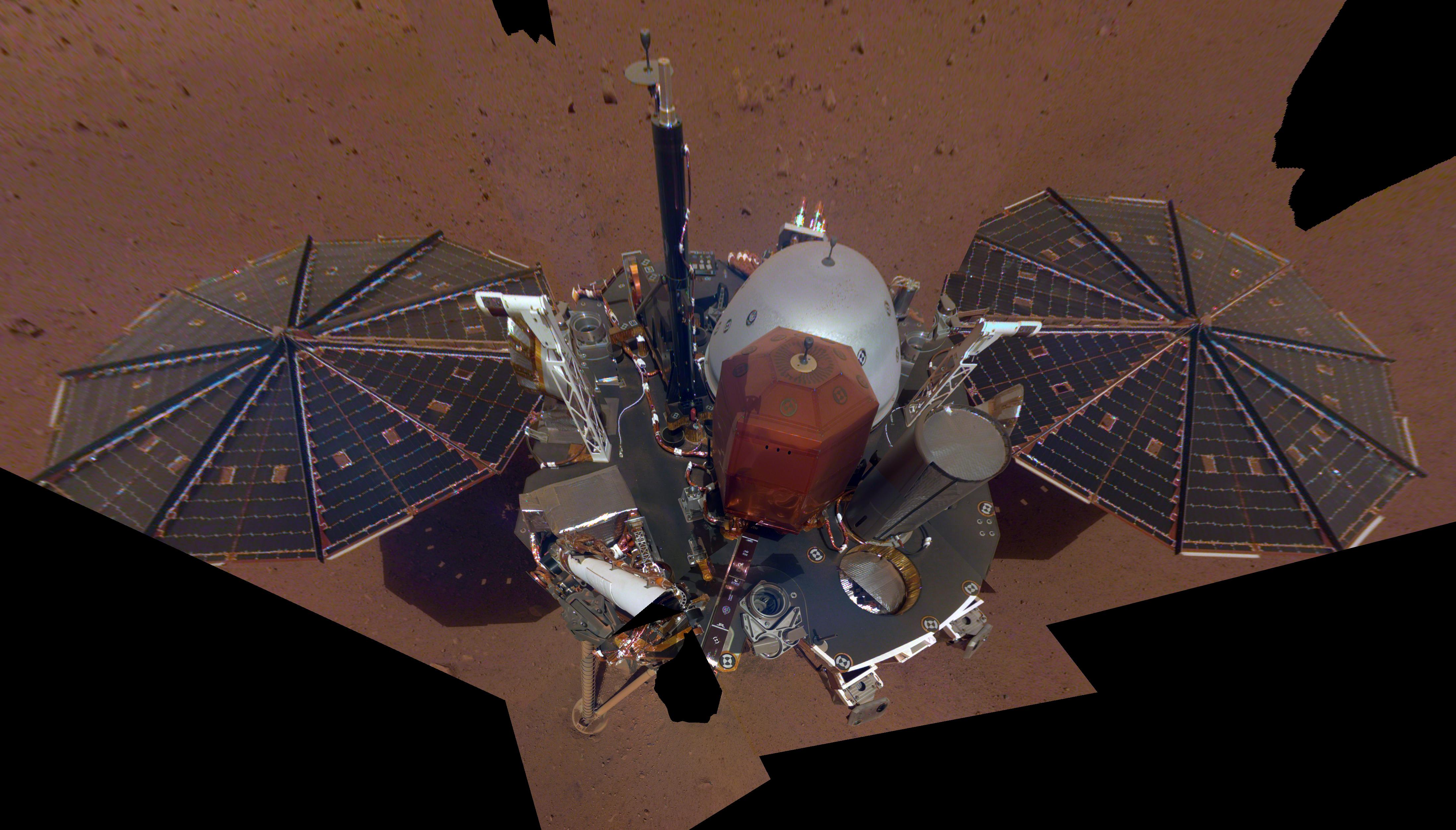
InSight landed in Elysium Planitia on 26 November 2018 to study Mars from the inside out. A stationary lander rather than a rover, it set an ultra-sensitive seismometer on the ground to listen for marsquakes.
Over four years it recorded more than 1,300 quakes, letting scientists measure the size of the crust, mantle and core for the first time. Its self-hammering heat probe failed to burrow into the soil, and dust building up on the solar panels ended the mission in December 2022.
Key facts
- Operator
- NASA
- Type
- Lander
- Launch
- 5 May 2018
- Landing
- 26 Nov 2018
- Key instruments
- SEIS, HP³, RISE
Highlights
- First seismic survey of another planet.
- Detected over 1,300 marsquakes.
- Sized the crust, mantle and core for the first time.
Hope
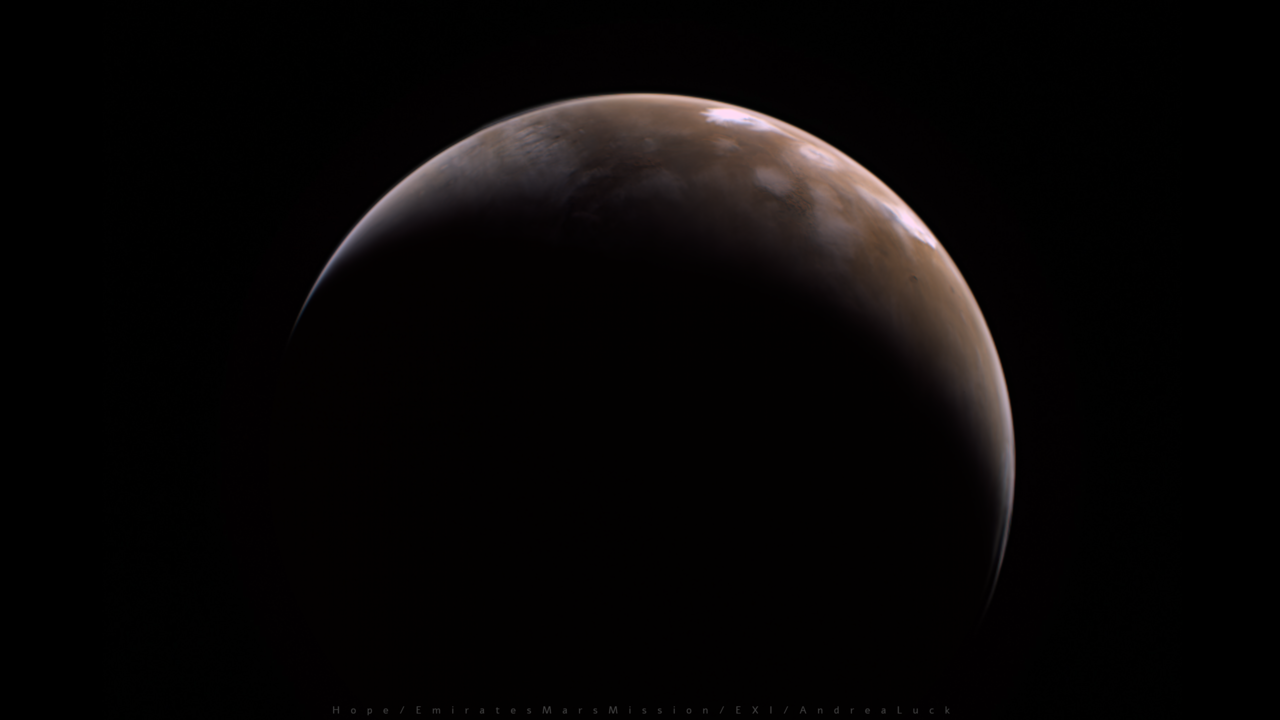
The Emirates Mars Mission, called Hope, reached orbit on 9 February 2021 — the Arab world's first interplanetary mission. Its high, wide orbit is built to watch Mars's weather across the whole planet and the whole day.
Hope has built the first full picture of daily and seasonal weather cycles, tracked dust storms and how gases escape, and captured striking observations of patchy aurora glowing in the night atmosphere. It remains active.
Key facts
- Operator
- UAE Space Agency / MBRSC
- Type
- Orbiter
- Launch
- 19 Jul 2020
- Orbit insertion
- 9 Feb 2021
- Focus
- Weather & climate
Highlights
- The Arab world's first interplanetary mission.
- Built the first whole-planet picture of Martian weather.
- Captured patchy aurora in the night atmosphere.
Tianwen-1
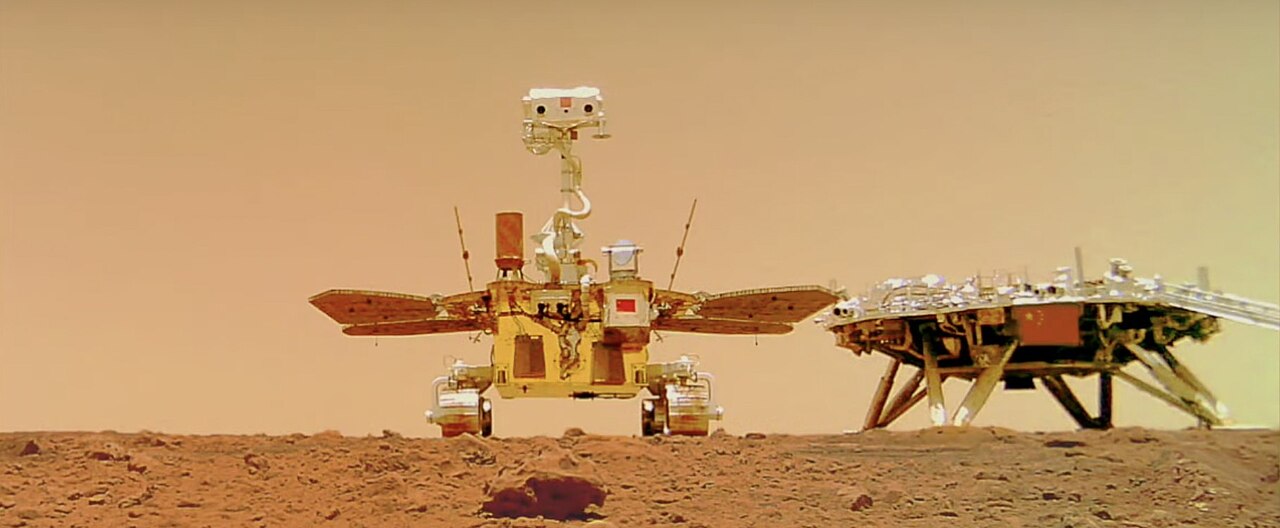
Tianwen-1 arrived on 10 February 2021 and did something no first Mars mission had done before: orbit, land and deploy a rover, all in a single attempt. The Zhurong rover touched down in Utopia Planitia on 15 May 2021.
Zhurong drove nearly two kilometres studying soil, rocks and subsurface layers before entering hibernation for the Martian winter in May 2022; it did not wake again, likely defeated by dust on its solar panels. The orbiter keeps mapping the planet and relaying data.
Key facts
- Operator
- CNSA
- Type
- Orbiter + lander + rover (Zhurong)
- Launch
- 23 Jul 2020
- Rover landing
- 15 May 2021
- Landing site
- Utopia Planitia
Highlights
- First mission to orbit, land and rove in one attempt.
- China's first Mars rover, Zhurong.
- Zhurong drove ~2 km before dust ended its run.
Perseverance
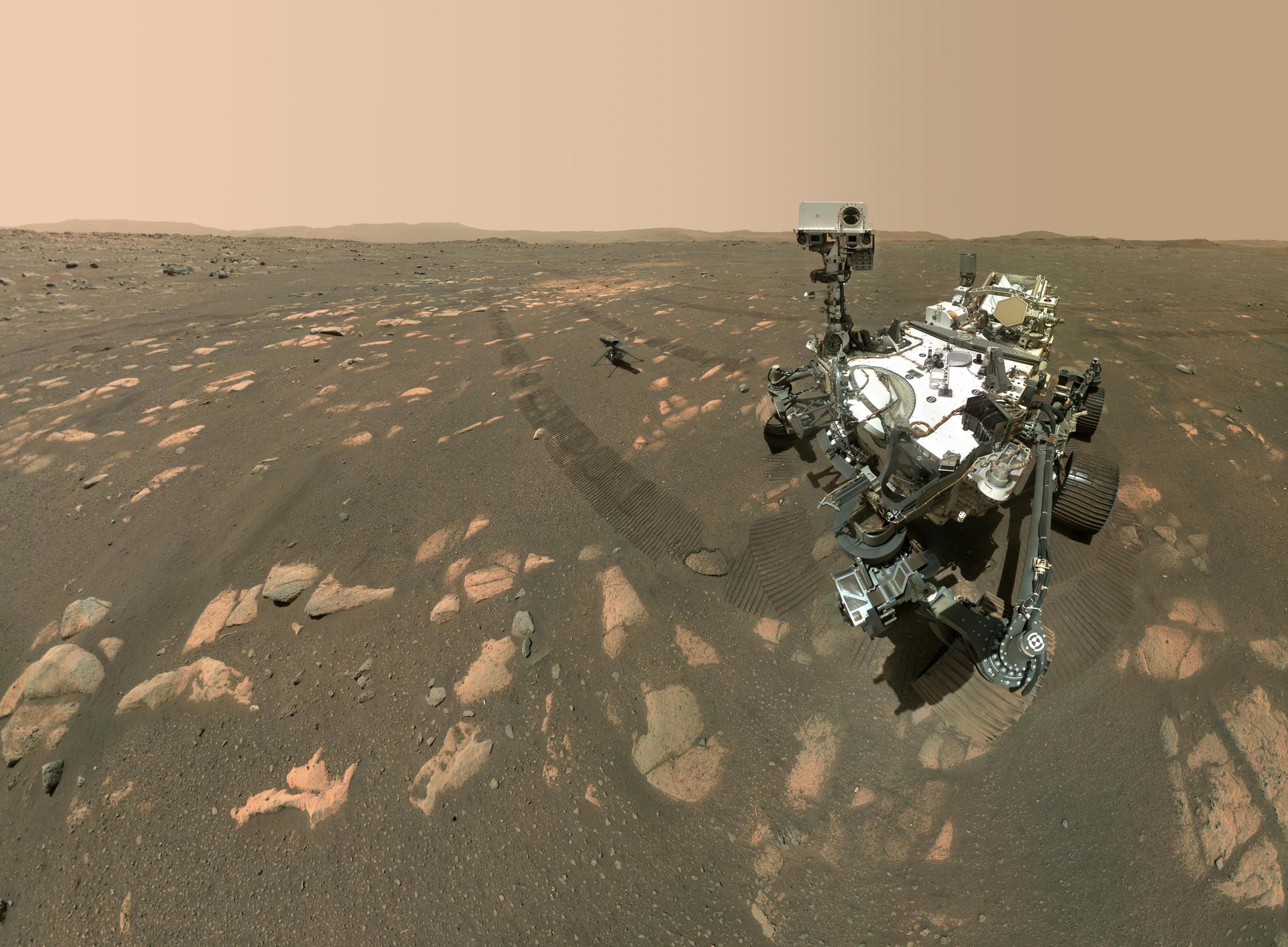
Perseverance landed in Jezero Crater on 18 February 2021, on the site of an ancient river delta chosen for its potential to preserve traces of past life. It is the centrepiece of the Mars Sample Return effort.
The rover searches for biosignatures and seals rock cores in sample tubes for a future return to Earth. Its MOXIE experiment produced oxygen from the CO₂ atmosphere, and it carried Ingenuity — the first aircraft to fly on another world, which logged 72 flights.
Key facts
- Operator
- NASA
- Type
- Rover
- Launch
- 30 Jul 2020
- Landing
- 18 Feb 2021
- Landing site
- Jezero Crater
- Payload
- Ingenuity + MOXIE
Highlights
- Hunting for signs of ancient microbial life in a river delta.
- Caching rock samples for return to Earth.
- MOXIE made oxygen from Mars's CO₂ atmosphere.
- Carried Ingenuity — first powered flight on another world (72 flights).
Rosalind Franklin
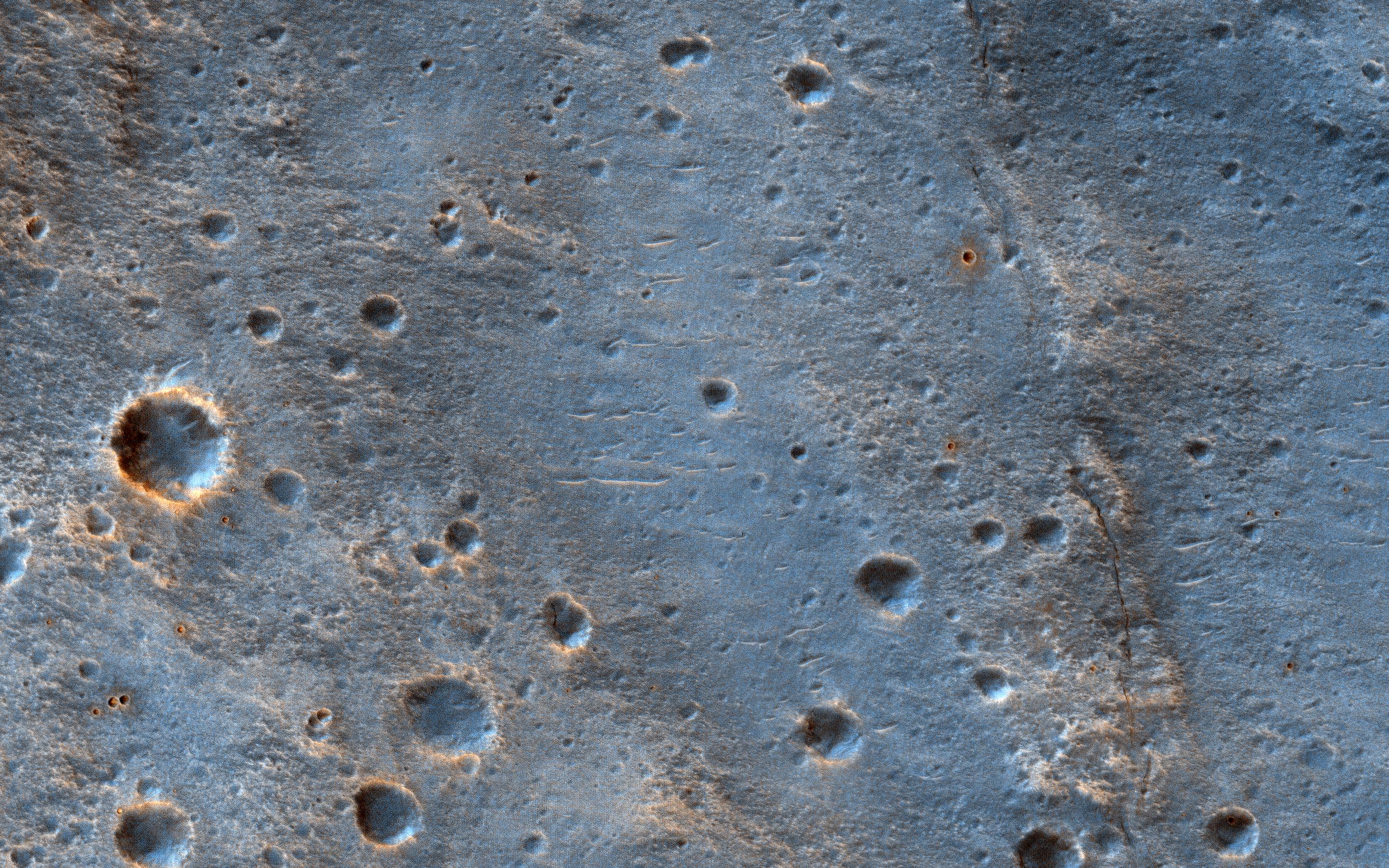
Rosalind Franklin is ESA's ExoMars rover, designed to do something no Mars mission has yet managed: drill up to two metres below the surface, where any organic molecules would be shielded from radiation, and search that fresh material for signs of past life.
The rover was ready years ago but its launch was cancelled in 2022 when ESA ended its partnership with Russia's Roscosmos. NASA is now helping provide the launch and landing elements, with liftoff targeted for 2028 and a touchdown in Oxia Planum. No date is guaranteed.
Key facts
- Operator
- ESA (with NASA)
- Type
- Rover
- Target launch
- 2028 (planned)
- Landing site
- Oxia Planum (planned)
- Signature capability
- 2 m subsurface drill
Highlights
- Aims to drill up to 2 m — deeper than any Mars mission.
- Built to search shielded soil for signs of past life.
- Launch cancelled in 2022, now retargeted with NASA's help.
Mars Sample Return
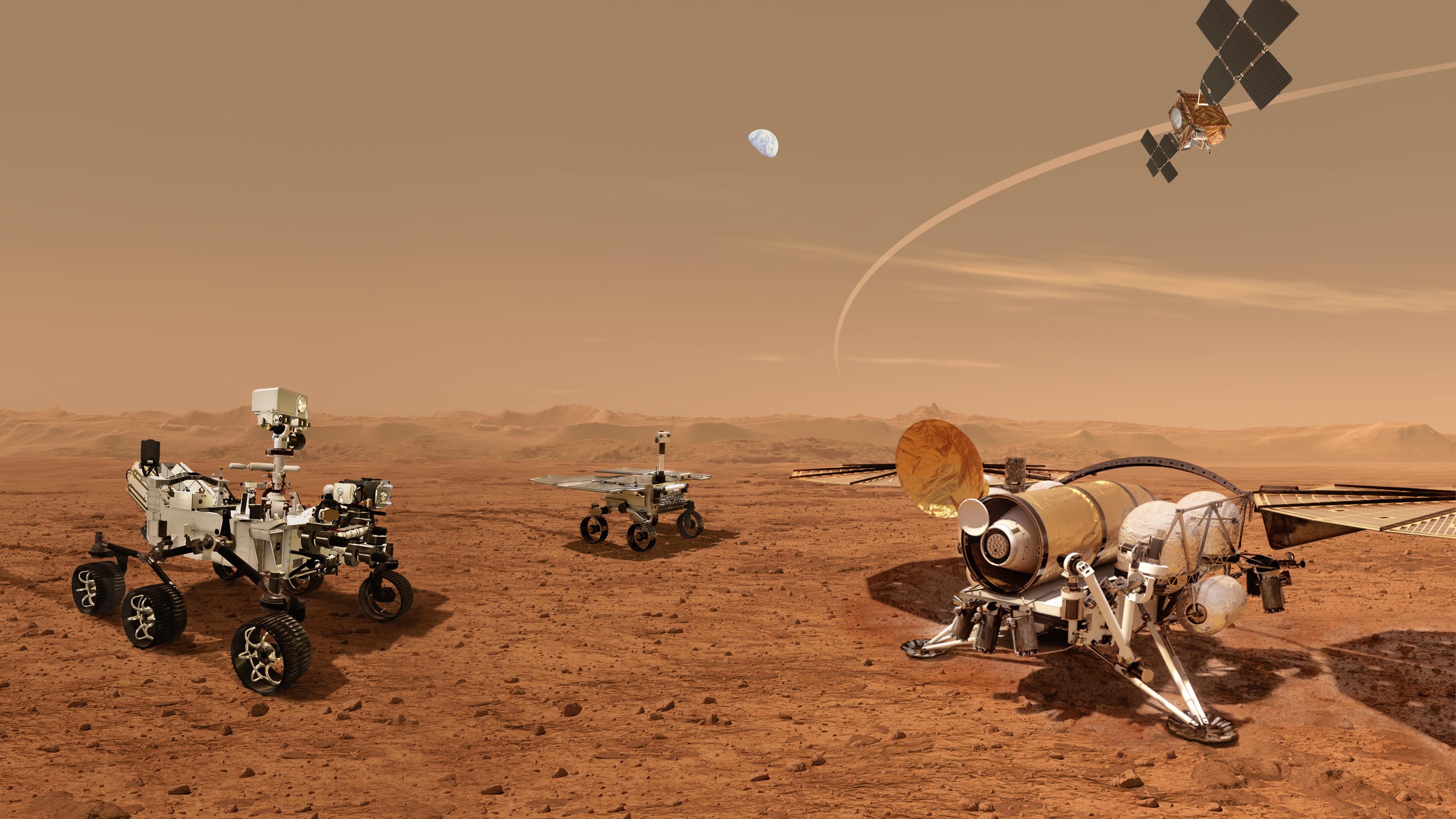
Mars Sample Return is a joint NASA–ESA campaign to do what no mission ever has: bring pieces of Mars back to Earth. Perseverance is already sealing rock and soil cores in Jezero Crater for a future spacecraft to collect.
The plan envisions a lander to gather the cached tubes, a small rocket (the Mars Ascent Vehicle) to launch them into orbit, and an ESA orbiter to catch the samples and ferry them home. The architecture is being reworked to cut cost and schedule, and it has no confirmed launch date.
Key facts
- Operator
- NASA + ESA
- Type
- Sample-return campaign
- Samples from
- Perseverance (Jezero Crater)
- Key elements
- Retrieval lander · ascent vehicle · Earth-return orbiter
- Launch date
- Not confirmed (under review)
Highlights
- Would return the first Mars samples to Earth.
- Perseverance is already caching the samples.
- Architecture under review to cut cost and schedule.