01The quick answer
Terraforming Mars — reshaping its climate and air until people could one day live there without a sealed suit or habitat — is not achievable with today’s technology. In theory, a warmer world with a thicker atmosphere and stable liquid water might be built up over centuries to millennia. But major obstacles remain: there is far too little accessible carbon dioxide to warm the planet, Mars keeps losing its atmosphere to space, and making the air actually breathable is a separate problem harder than everything else combined.
02What terraforming means
Terraforming is the deliberate, large-scale engineering of a planet’s climate and atmosphere toward Earth-like, habitable conditions. For Mars, that means several linked goals: warming the surface, thickening the atmosphere enough to raise the pressure, allowing liquid water to be stable in the open, and — the hardest step of all — eventually producing an atmosphere a human could breathe.
It is important to separate the goals. A warmer, thicker atmosphere would still be mostly carbon dioxide — enough for liquid water and plants under pressure, but not for people without breathing gear. A truly breathable, oxygen-rich atmosphere is a far more distant target. Most serious discussion is about the first goal; the second is closer to science fiction than engineering.
03Why Mars is even a candidate
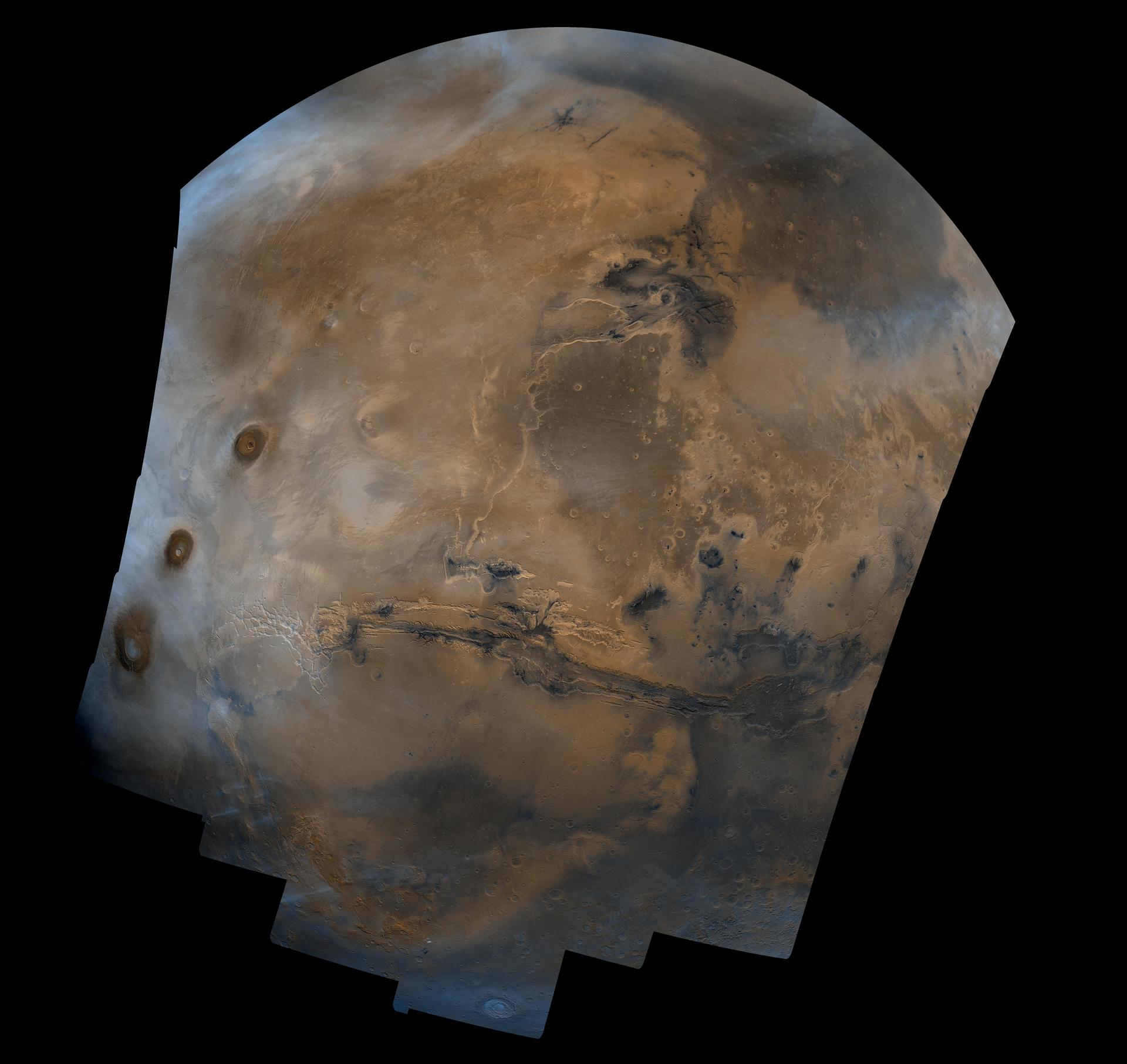
Mars is the only nearby world people seriously discuss terraforming, and for good reasons. Billions of years ago it was warmer and wetter, with rivers, lakes and possibly a shallow sea — the dry riverbeds and clay minerals are still there to read. It has not lost its water entirely: large reserves survive as ice at the poles and buried underground, alongside frozen carbon dioxide. And its day is about 24.6 hours, strikingly close to Earth’s, so a terraformed Mars would keep a familiar day–night rhythm.
None of this makes terraforming easy — it makes Mars the least impossible target. Venus is far too hot and its atmosphere crushingly dense; the Moon has almost no volatiles to work with. Mars at least has the raw ingredients of a past habitable world, which is why the question keeps coming up.
04The core problem: not enough CO₂
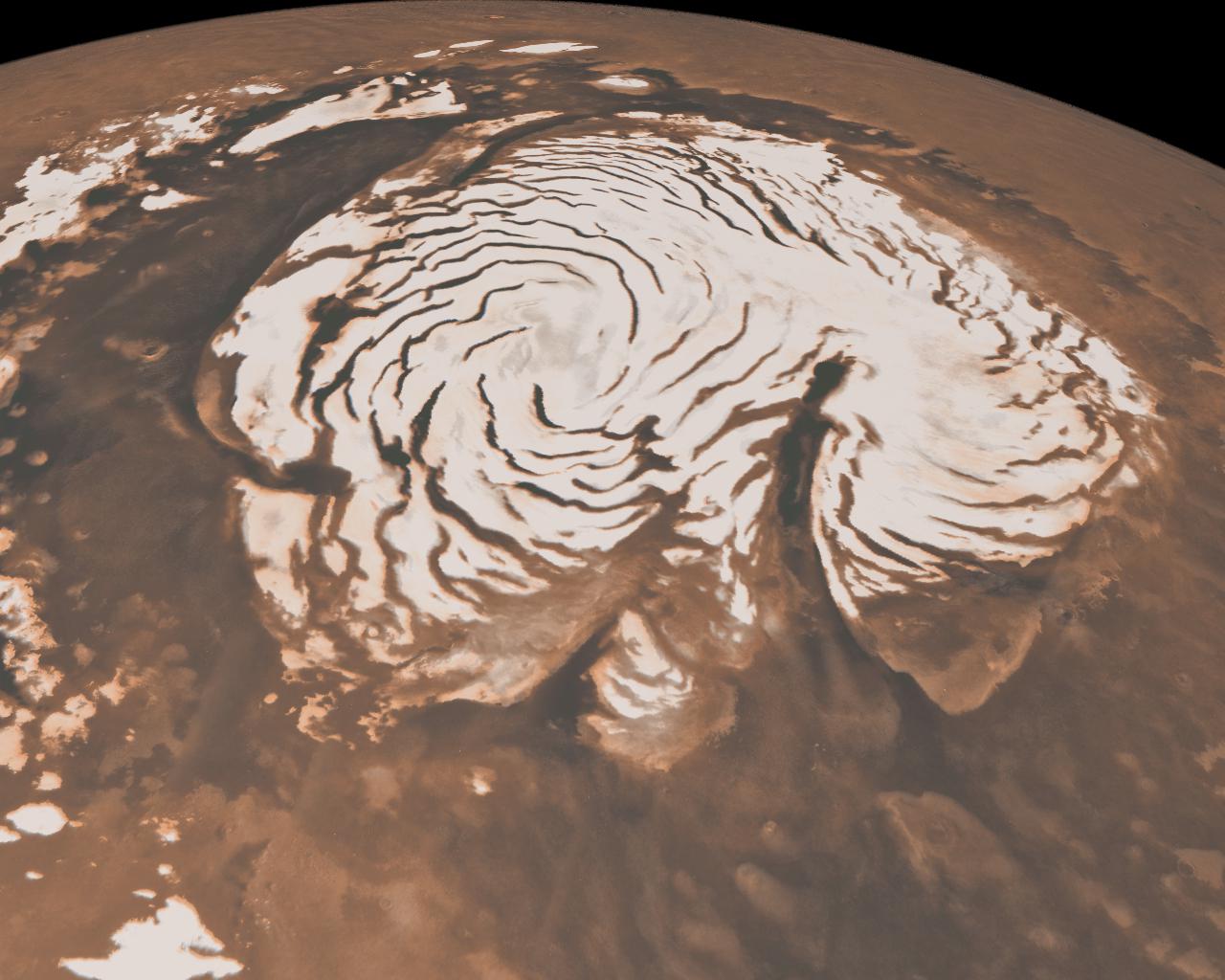
The single biggest obstacle is that Mars simply does not hold enough carbon dioxide to warm itself. The plan behind most warming schemes is a feedback loop: release CO₂, trap more heat, melt more CO₂ ice, release more gas. It only works if there is enough gas locked away to start with — and there is not.
The key study is by Bruce Jakosky and Christopher Edwards, published in Nature Astronomy in 2018. They inventoried every accessible reservoir of CO₂ — the polar caps, gas adsorbed in dust, and carbon locked in minerals — and calculated that mobilising all of it would raise the surface pressure to only about 7% of the roughly 1 bar needed to warm Mars enough for liquid water to be stable. Their conclusion was blunt: terraforming Mars is not possible using present-day technology.
For scale, Mars’ current surface pressure is only about 6–7 mbar — less than 1% of Earth’s roughly 1,013 mbar — and that thin atmosphere is about 95% carbon dioxide. Even releasing everything Mars has would leave it far short of a breathable, Earth-like world.
The scientific bottom line
Based on the accessible CO₂ inventory, current science concludes that terraforming Mars — warming it and thickening its atmosphere enough for liquid water and, eventually, breathable air — is not possible with present-day technology. There is not enough carbon dioxide to do the job, and no known way to release much more.
05And the atmosphere would leak away
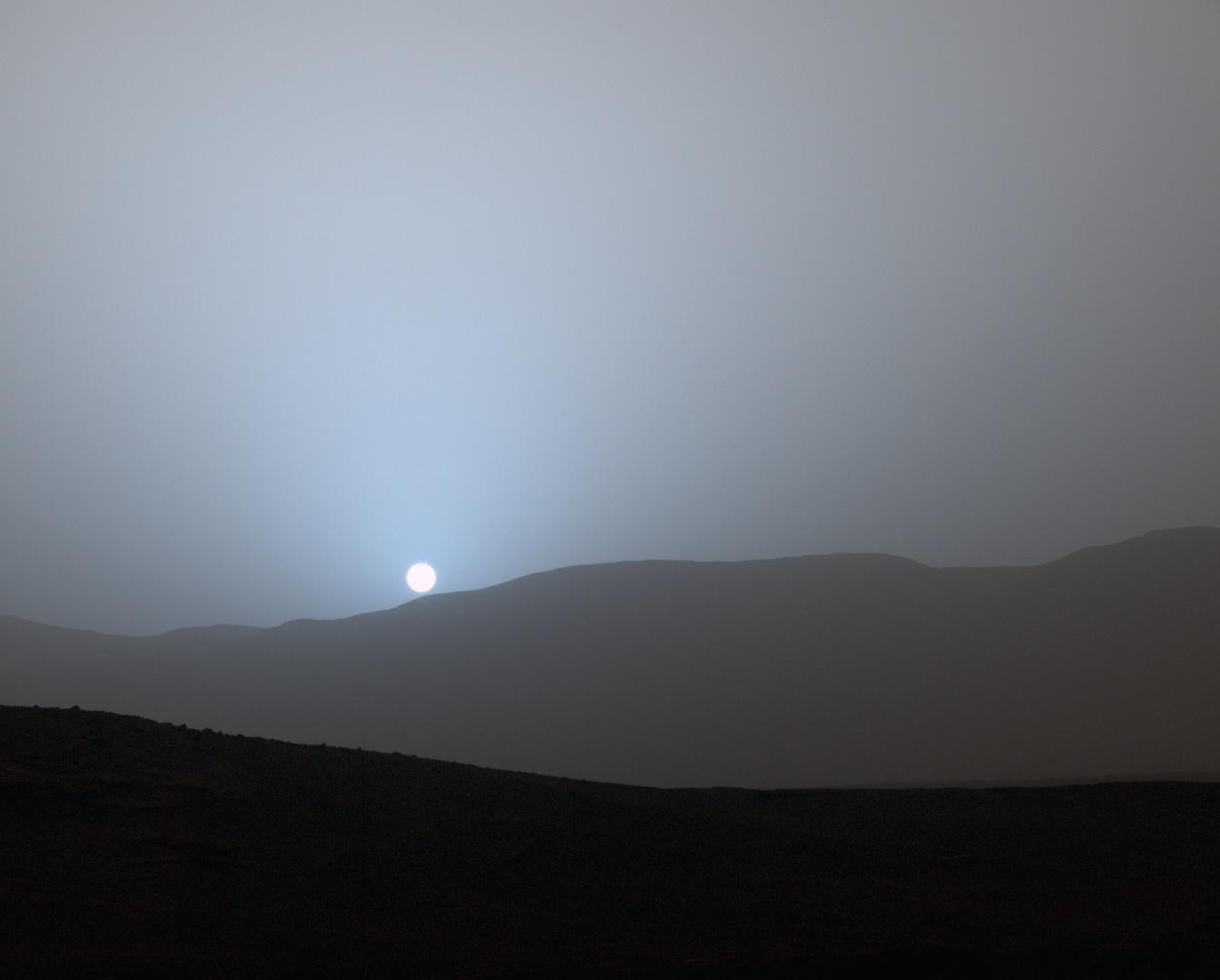
Even if you could somehow build a thicker atmosphere, Mars would slowly lose it again — the same process that stripped the planet bare in the first place. Mars lost its global magnetic field around 4 billion years ago. Without that shield, the solar wind steadily eroded most of its atmosphere into space over the following aeons. NASA’s MAVEN orbiter measured this loss directly, confirming how the Sun’s particles carry Martian gas away.
Two things make Mars especially leaky: its gravity is only 0.38 g, so it holds gas loosely, and it still has no global magnetic field to deflect the solar wind. The good news is that this loss plays out over very long timescales — an engineered atmosphere would not vanish overnight — but it means terraforming is not a one-time job. Any thick atmosphere would need to be topped up or actively protected, effectively forever.
06The methods people propose
A range of terraforming methods have been proposed over the decades, from the semi-plausible to the frankly speculative. It is worth seeing them side by side — and being honest about where each one runs into physics, scale or the CO₂ shortfall above. None is anywhere near feasible today.
| Method | The idea | Reality check |
|---|---|---|
| Release CO₂ from poles & regolith | Warm the poles to trigger a runaway feedback loop that thickens the air. | Limited — there is simply too little accessible CO₂ (Jakosky & Edwards, 2018). |
| Super-greenhouse gases | Build factories that pump out PFC/CFC-like gases to warm the atmosphere. | Slow; needs a vast, sustained industry; the gases break down and must be replenished. |
| Giant orbital mirrors | Reflect extra sunlight onto the polar caps to vaporise the ice. | Enormous, unproven engineering — mirrors far larger than anything ever built. |
| Nuclear detonations over the poles | Elon Musk’s provocative idea: vaporise polar CO₂ ice quickly with nuclear blasts. | Scientists say there is not enough CO₂ ice for it to matter — and the fallout risk is severe. |
| Import volatiles | Redirect ammonia- or water-rich comets and asteroids to impact Mars and add gas and water. | Extreme scale, dangerous and highly speculative — well beyond any current capability. |
| Artificial magnetosphere at the L1 point | Place a magnetic shield at the Mars–Sun L1 point to protect a rebuilt atmosphere (a concept NASA’s Jim Green floated in 2017). | Conceptual only — an intriguing idea with no path to being built. |
07The realistic near-term path: domes and paraterraforming
If terraforming a whole planet is out of reach, the realistic near-term version is far more modest: not remaking Mars, but building enclosed, pressurised pockets of habitable space. This is sometimes called paraterraforming — sealing and warming the inside of domes and habitats rather than the open surface. It is the same logic as the first Mars bases, scaled up gradually.
There is even a promising piece of science here. A 2019 Harvard-led study by Robin Wordsworth and colleagues showed that a layer of silica aerogel just 2–3 cm thick could warm the ground beneath it above the melting point of water while also blocking harmful ultraviolet light — a kind of solid-state greenhouse. That would not terraform Mars, but it points to a way to make small, localised patches of the surface habitable for plants under a translucent shield.
08How long would it take
Any answer is an estimate, and the range is enormous. Advocates such as Robert Zubrin and planetary scientist Christopher McKay have argued that a warmer, thicker atmosphere might be started within optimistic timescales of centuries. At the other end, estimates for a naturally breathable, oxygen-rich atmosphere run to roughly 100,000 years. Most researchers treat full terraforming as, at best, a multi-century to multi-millennial project — and, given the CO₂ shortfall, likely not possible at all with anything like current technology.
And making the air breathable is a separate, far harder step. Warming Mars is one thing; filling its atmosphere with free oxygen is another entirely. On Earth, biology took billions of years to build up an oxygen-rich atmosphere, and there is no shortcut we know of. A terraformed-but-CO₂ Mars where crops grow under domes is imaginable in principle; an open-air Mars where a person breathes freely is not on any credible engineering horizon.
The ethics question
There is also a reason for caution beyond engineering. If native Martian microbial life exists — even fossil traces — a terraforming campaign could destroy it before it is ever found and studied. This is the concern behind planetary protection: we may have only one chance to learn whether Mars had its own biology, and reshaping the planet would forfeit it.
09Frequently asked questions
Can we terraform Mars today?
No. Current science concludes that terraforming Mars is not possible with present-day technology — there is not enough accessible carbon dioxide to warm the planet, and no known way to release much more.
Is there enough CO₂ on Mars to warm it?
No. The 2018 Jakosky and Edwards study found that mobilising all accessible CO₂ — polar caps, dust and minerals — would raise the pressure to only about 7% of the roughly 1 bar needed for stable liquid water.
Why did Mars lose its atmosphere?
Mars lost its global magnetic field around 4 billion years ago. Without that shield, the solar wind stripped most of its atmosphere into space over billions of years — a process NASA’s MAVEN mission measured directly.
Could we nuke the poles to warm Mars — does Elon Musk’s idea work?
Elon Musk has provocatively suggested detonating nuclear weapons over the poles to vaporise CO₂ ice fast. Scientists point out there is not enough CO₂ ice for it to make a meaningful difference, so the idea does not achieve terraforming.
How long would terraforming Mars take?
Estimates range from optimistic centuries (advocates like Robert Zubrin and Christopher McKay) to roughly 100,000 years for a naturally breathable atmosphere. Most researchers treat full terraforming as a multi-century-to-millennial project at best.
What are orbital mirrors and super-greenhouse gases?
Both are proposed warming methods. Giant orbital mirrors would reflect sunlight onto the poles to vaporise ice; super-greenhouse gases would be manufactured (PFC/CFC-like) to trap heat. Both need enormous, unproven industry and remain concepts, not capabilities.
What is paraterraforming — could we just build domes?
Paraterraforming means sealing and warming enclosed habitats and domes rather than the whole planet. It is the realistic near-term path: pressurised pockets of habitable space that grow over time, not a remade world.
Would a new atmosphere stay, or would it leak away?
It would slowly leak. With only 0.38 g of gravity and no global magnetic field, Mars keeps losing gas to the solar wind. The loss is slow, but any thick atmosphere would need to be topped up or actively protected indefinitely.
Could Mars ever have breathable air?
Producing an oxygen-rich, breathable atmosphere is a separate and far harder step than warming Mars. On Earth, biology took billions of years to build one. It is not on any credible engineering horizon.
Is it ethical to terraform Mars?
It raises real concerns. If native Martian microbial life exists, terraforming could destroy it before it is ever studied. This is the reasoning behind planetary protection — we may have only one chance to learn whether Mars had its own biology.
Has anyone started terraforming Mars?
No. No terraforming has begun, and no project is planned. Current work is robotic exploration and early planning for crewed missions and small, sealed habitats — not planet-scale climate engineering.
Will humans live on a terraformed Mars in our lifetime?
Almost certainly not. Terraforming, if it is possible at all, is a matter of centuries to millennia. People may live on Mars this century — but inside sealed habitats and domes, on an unchanged planet, not an open-air terraformed one.
Why is Mars the target rather than another planet?
Mars was once warmer and wetter, still holds water ice and frozen CO₂, and has a day of about 24.6 hours. Venus is far too hot and dense; the Moon lacks the volatiles. Mars is the least impossible candidate, not an easy one.